Updated after October 2026 General Conference
The answer is fairly clear: The Church of Jesus Christ of Latter-day Saints opposes and counsels against gambling in any form, including sports betting and government-sponsored lotteries.
People also search this question as “Can Mormons gamble?” But the harder questions usually are not about casinos or lottery tickets. What about a $5 March Madness pool at work? A fantasy football league with a buy-in? Super Bowl squares? A prediction market? A charity raffle? Or a free bracket where someone else provides the prize?
Those cases are worth separating carefully because the Church does not publish a specific rule for every game, app, contest, or financial product.
What Does the LDS Church Officially Say About Gambling?
The current General Handbook, section 38.8.18, “Gambling and Lotteries,” gives a short and direct statement:
“The Church opposes and counsels against gambling in any form.”
It specifically names sports betting and government-sponsored lotteries.
You may see older Church articles and third-party pages cite the gambling policy as section 38.8.17. That reflects an earlier numbering of the Handbook. In the current online edition, 38.8.17 is Fast Day, while 38.8.18 is Gambling and Lotteries.
The Church’s Gospel Topics page on gambling also opposes gambling, including government-sponsored lotteries. Church teaching over time has repeatedly connected gambling with the desire to receive something without earning it, the virtues of work and thrift, and the damage gambling can cause to individuals and families.
But neither the Handbook nor Gospel Topics attempts to classify every modern activity. That matters because gambling today can look very different from the traditional picture of a casino table.
How Do Common Activities Relate to Published Church Counsel?
| Activity | Value at Risk? | How It Relates to Published Counsel |
|---|---|---|
| Sportsbook betting | Yes | Handbook names this directly (§38.8.18) |
| Lottery tickets / scratch-offs | Yes | Handbook names government lotteries directly |
| Casino games and slots | Yes | Traditional gambling; covered by the Church’s general counsel |
| Prediction markets | Usually | Named by President Christofferson in October 2026; not named in the Handbook sentence |
| Paid March Madness pool | Yes | Not named specifically; participants stake money on an uncertain result |
| Free bracket with a sponsored prize | No personal stake | No personal wager is required |
| Paid fantasy sports league | Yes | Not named specifically; participants put money at risk based on future results |
| Free fantasy sports league | No | Recreational competition without a monetary wager |
| Super Bowl squares with a cash buy-in | Yes | Not named specifically; money is staked on an uncertain score outcome |
| Paid raffle | Yes | Not named specifically; value is exchanged for a chance to win |
| Free prize drawing | No | No money or other personal stake is required |
| Bingo with an entry fee and cash prize | Yes | Not named specifically; has the basic structure of wagering for a possible return |
Important: This table applies published Church principles to familiar situations. It is an analytical reference, not an additional Church policy document.
What President Christofferson Said in October 2026
Gambling was already addressed in Church policy before October 2026. President D. Todd Christofferson’s General Conference message did not create a new rule.
What it did do was apply the existing concern directly to the world of modern digital gambling.
Speaking on October 3, 2026, President Christofferson described three major online forms driving the growth of gambling: sports betting, casino-type games, and prediction markets. He also emphasized how smartphones have made gambling continuously and privately accessible.
His conclusion was direct:
“Gambling is morally wrong.”
But his message was not limited to whether someone wins or loses a particular wager.
“What is the opportunity cost of gambling?” he asked. “What do you forgo in terms of money, time, relationships and worthwhile pursuits?”
That question matters for many of the gray areas below. A $5 office bet may have very different financial consequences from a $5,000 wager, but President Christofferson’s argument asks members to consider more than the size of the loss.
His 2026 message explicitly discusses modern online forms that may look like apps, games, or financial markets.
Can Latter-day Saints Bet on Sports?
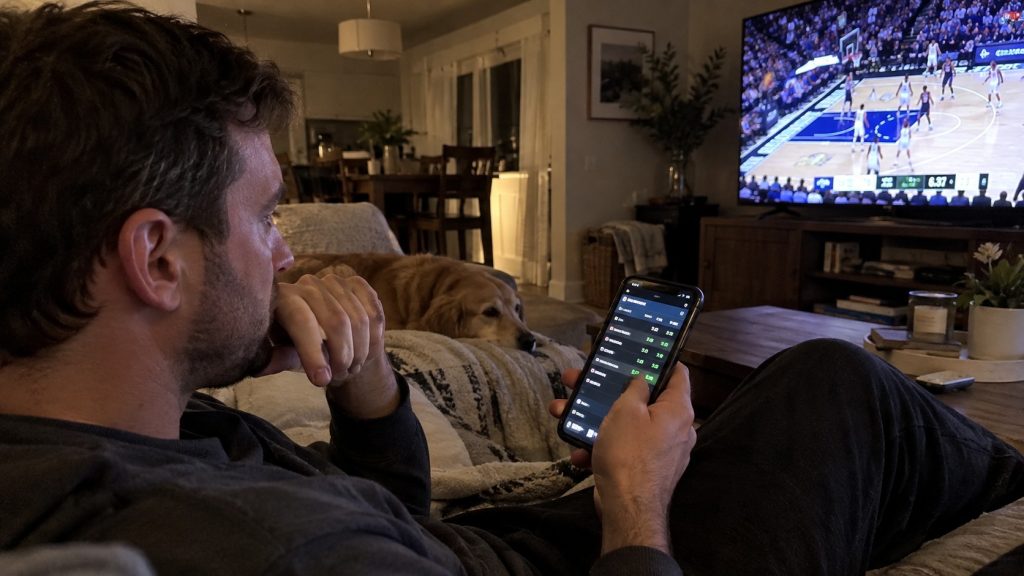
The current Handbook specifically names sports betting.
That clearly covers wagering money on sporting events through a sportsbook or betting app.
A private bet between friends is not named separately in the Handbook. It is better understood as an application of the same published principle rather than as its own official Church category.
What about betting with friends?
Suppose two friends say, “$10 says Edmonton wins tonight.”
No sportsbook is involved, and the amount may be insignificant to both people. But money has still been deliberately placed at risk based on an uncertain sporting outcome.
The Church has not published a separate rule for casual bets between friends. What it has published is a general opposition to gambling and a specific reference to sports betting.
What about Super Bowl squares?
If participants pay for squares and winners receive the pooled money based on the game score, money has been placed at risk on an uncertain result.
A free office game in which nobody contributes money is structurally different.
What about a March Madness office pool?
Suppose everyone in an office contributes $5 or $10, fills out a bracket, and the winner receives the pool.
It may feel much less serious than placing a large sportsbook bet.
But the current Handbook does not establish a dollar amount below which gambling stops being gambling.
A $10 pool and a $10,000 sportsbook wager plainly do not have the same consequences. That does not mean the Church has published a small-bet exemption.
What About Fantasy Football and Paid Fantasy Leagues?
Fantasy sports are less straightforward because skill can play a substantial role.
Participants research players, choose rosters, make trades, and make strategic decisions. For that reason, fantasy sports do not look exactly like a lottery or slot machine.
But skill does not settle the entire question.
The more useful distinction is whether participants are putting something of value at risk based on future results.
Free fantasy leagues
If friends compete for standings, bragging rights, or a trophy provided without an entry fee, nobody is wagering money.
That is meaningfully different from a gambling arrangement.
Paid fantasy leagues
If every participant contributes an entry fee and that money becomes a prize pool for the winners, there is now a financial stake tied to future sporting outcomes.
The Handbook does not specifically mention fantasy football or fantasy baseball. It would therefore be inaccurate to claim that the Church has issued a detailed rule governing every fantasy-sports format.
But a league with a cash buy-in raises a different question from a free recreational league precisely because participants are now putting money at risk for the possibility of receiving more.
Are Prediction Markets Gambling?
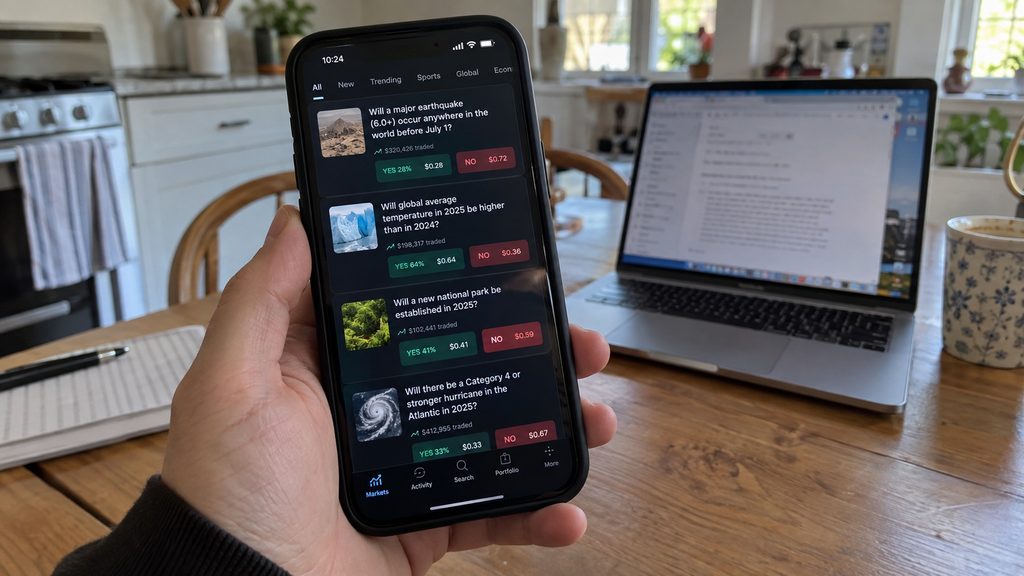
Prediction markets are one reason President Christofferson’s October 2026 message is especially relevant.
They may look less like traditional gambling than a casino or sportsbook. Users can buy contracts tied to whether a future event will happen, and the interface can resemble financial trading.
President Christofferson nevertheless specifically named prediction markets in his discussion of the growth of online gambling.
The General Handbook’s short gambling policy does not separately mention prediction markets or provide a financial classification of individual contracts.
But the 2026 message makes it difficult to argue that prediction markets were simply outside the type of modern activity Church leaders had in mind.
Office Pools, Raffles, Bingo and Small Friendly Bets
Not every casual competition has the same structure.
A useful way to think through these situations is to ask:
- Does a participant have to contribute money or something else of value?
- Is that contribution at risk?
- Does the participant hope to receive more because of an uncertain result?
- Would the activity still work the same way if nobody had to contribute money?
A free office bracket with a company-provided prize is different from a bracket in which every employee contributes $10 and the winner takes the pot.
Likewise, an informal “loser buys lunch” arrangement is not identical in scale to commercial sports betting. But once something of value is deliberately staked on an uncertain result, the activity starts to share the basic structure of a wager.
That is an application of the Church’s published principle — not a separate official ruling on lunch bets.
What about raffles?
The Handbook does not provide a separate rule for every form of raffle.
In a typical paid raffle, someone exchanges money for a chance to receive a prize. In a free drawing, the participant puts nothing at risk.
Those are structurally different arrangements.
It would be too broad to say that anything involving chance is gambling. A free door prize also involves chance, but the participant has not wagered anything.
What about bingo?
The same distinction applies.
A recreational bingo game with no required stake is different from a game in which players pay to participate for the possibility of receiving cash or pooled funds.
Again, the Church has not published a bingo-specific rule. The distinction here is an application of the broader gambling principle.
Can Latter-day Saints Buy Lottery Tickets?
Here the Handbook is explicit.
The Church’s opposition to gambling specifically includes government-sponsored lotteries.
That includes the ordinary purchase of a state, provincial, or national lottery ticket or scratch-off.
A common follow-up is what happens if someone receives a lottery ticket as a gift.
The Handbook does not publish a separate rule governing gifted tickets, so it would be inappropriate to invent one.
For the main question, however, the published position is clear: government-sponsored lotteries are specifically included in the Church’s counsel against gambling.
Does It Matter If the Bet Is Only $5?
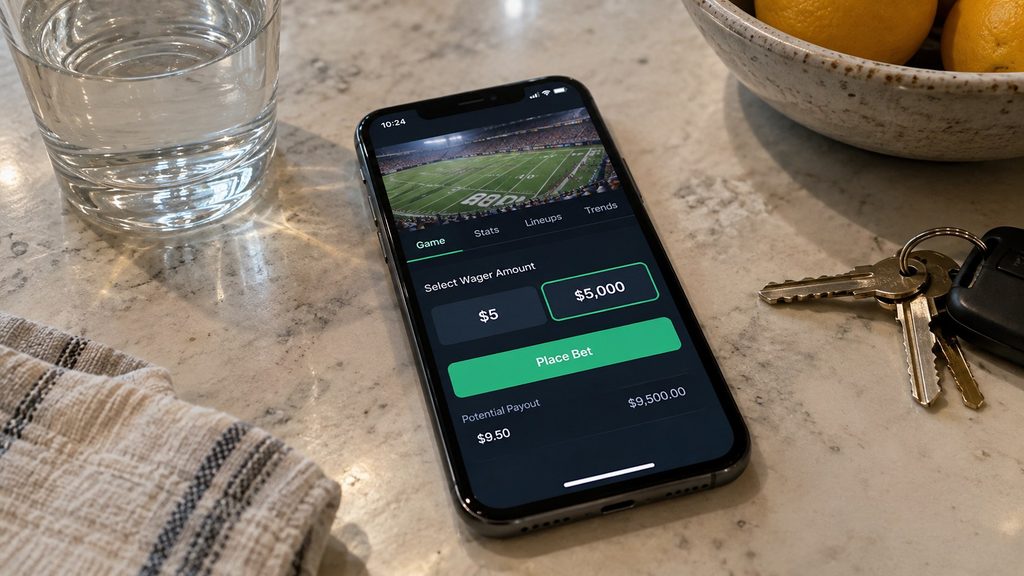
This may be the most interesting gray-area question.
A $5 bet and a $5,000 bet obviously do not create the same financial risk.
Losing $5 may have virtually no effect on someone’s household budget. Losing thousands of dollars can damage savings, increase debt, or seriously affect a family.
But the Church does not publish a monetary threshold below which a wager stops being gambling.
That means two different questions should not be confused:
How serious are the consequences?
and
What kind of activity is taking place?
The size of the wager obviously affects the first question.
The published Church policy does not provide an amount that changes the second.
President Christofferson’s opportunity-cost question adds another dimension. Even where the direct financial loss is small, he asked members to think about what gambling displaces in money, time, relationships, and worthwhile pursuits.
So “it is only five dollars” may be relevant to the severity of the financial consequence. It does not appear in the Handbook as an exception to the Church’s general counsel against gambling.
Does Gambling Affect a Temple Recommend?
The published temple recommend interview does not contain a separate question asking whether a member gambles.
That fact should not be stretched in either direction.
It does not mean the Church approves of gambling. The Church’s position is stated separately in the General Handbook.
It also would be inaccurate to invent a rule saying that a particular wager automatically causes someone to lose a temple recommend. The Handbook does not publish such a formula.
Church instructions tell leaders to use the published temple recommend questions and not to add or remove requirements.
For an individual member wondering how a particular circumstance affects his or her worthiness, that becomes a personal religious question rather than something an independent website should decide.
For purposes of explaining published Church policy, that is as far as this article should go.
For the full list of current interview questions and how the process works, see our guide to the LDS temple recommend interview.
Why Does the Church Oppose Gambling?
The Church’s argument is broader than simply, “You might lose money.”
Church teaching has long connected gambling with the desire to receive something without earning it and has contrasted that idea with work, thrift, service, and responsible stewardship.
President Christofferson restated that principle in contemporary terms in October 2026:
“Gambling is built on the desire to obtain something for nothing.”
He argued that gambling depends on gains coming at someone else’s expense and contrasted that structure with the commandment to love one’s neighbor.
He also described time and financial resources as stewardships. In that framework, the question is not simply whether someone can afford a particular bet, but what else those resources could have been used to accomplish.
Another concern is influence on other people. Someone may believe that occasional gambling will never become a serious personal problem while overlooking the effect his or her example could have on someone more vulnerable to gambling.
And smartphones have changed the practical environment. Gambling no longer necessarily requires a trip to a casino, lottery kiosk, or racetrack. It can be available privately and repeatedly throughout the day.
That accessibility is a major part of why the issue received renewed attention in 2026.
Is Investing the Same as Gambling?
Not everything involving financial risk is automatically gambling.
Ordinary investing involves uncertainty. A stock can fall. A business can fail. A property can lose value.
But risk alone is not the same thing as a wager.
Traditional investing generally involves purchasing an asset or providing capital with an expectation that it may create or produce value over time. Gambling centers on staking something of value on an uncertain result in hopes of receiving more.
The line can become less obvious with highly speculative financial activity, which is one reason prediction markets create new questions.
The Church, however, does not publish a comprehensive financial taxonomy classifying every stock trade, option, cryptocurrency transaction, speculative investment, or event contract.
An independent LDS explainer should therefore resist declaring every risky transaction either “gambling” or “not gambling” on the Church’s behalf.
The Bottom Line
The Church of Jesus Christ of Latter-day Saints has a clear published position: it opposes and counsels against gambling in any form, explicitly including sports betting and government-sponsored lotteries.
The more difficult questions involve activities the Handbook does not name individually: paid fantasy leagues, March Madness pools, raffles, Super Bowl squares, and small informal bets.
The Church also does not publish a dollar threshold that creates an exception for small wagers.
President D. Todd Christofferson’s October 2026 General Conference message adds important modern context. He specifically discussed sports betting, casino-type online games, and prediction markets, making clear that the Church’s concern about gambling is not limited to traditional casinos and lotteries.
The most accurate way to discuss the gray areas is therefore to separate what the Church explicitly says from how its published principles may apply — without creating additional Church rules that have not actually been published.
Frequently Asked Questions
Can Mormons gamble?
No. The Church of Jesus Christ of Latter-day Saints opposes and counsels against gambling in any form. The current General Handbook specifically includes sports betting and government-sponsored lotteries.
Can Latter-day Saints bet on sports?
No. The General Handbook specifically names sports betting as a form of gambling the Church opposes and counsels against.
Can Mormons buy lottery tickets?
No. Government-sponsored lotteries are explicitly included in the Church’s published counsel against gambling.
Can Latter-day Saints join a paid March Madness pool?
The Handbook does not specifically mention March Madness pools. A paid pool, however, involves participants putting money at risk based on an uncertain sporting outcome. The Church does not publish a small-dollar exemption for gambling.
Is paid fantasy football considered gambling by the LDS Church?
The Church has not published a rule naming every fantasy-sports format. A free fantasy league involves no monetary wager, while a paid league adds a financial stake tied to future sporting results.
Are prediction markets gambling?
President D. Todd Christofferson specifically included prediction markets in his October 2026 discussion of modern online gambling. The General Handbook’s short gambling policy does not name prediction markets individually.
Does gambling automatically make someone lose a temple recommend?
The public temple recommend interview does not contain a separate question about gambling, and the Handbook does not publish a rule saying that a particular wager automatically causes someone to lose a recommend.
Is investing considered gambling by the LDS Church?
The Church does not publish a comprehensive classification of financial instruments. Financial risk alone is not necessarily the same as gambling, so ordinary investing should not automatically be labeled gambling.
Is gambling against the Word of Wisdom?
No. Gambling is not addressed as part of the Word of Wisdom. The Word of Wisdom concerns health-related practices and substances, while gambling is addressed separately in the General Handbook and Church teaching.
What if sports betting is legal where I live?
Legal status and Church guidance are separate questions. A state or country may legally permit sports betting while the Church continues to counsel its members against gambling.