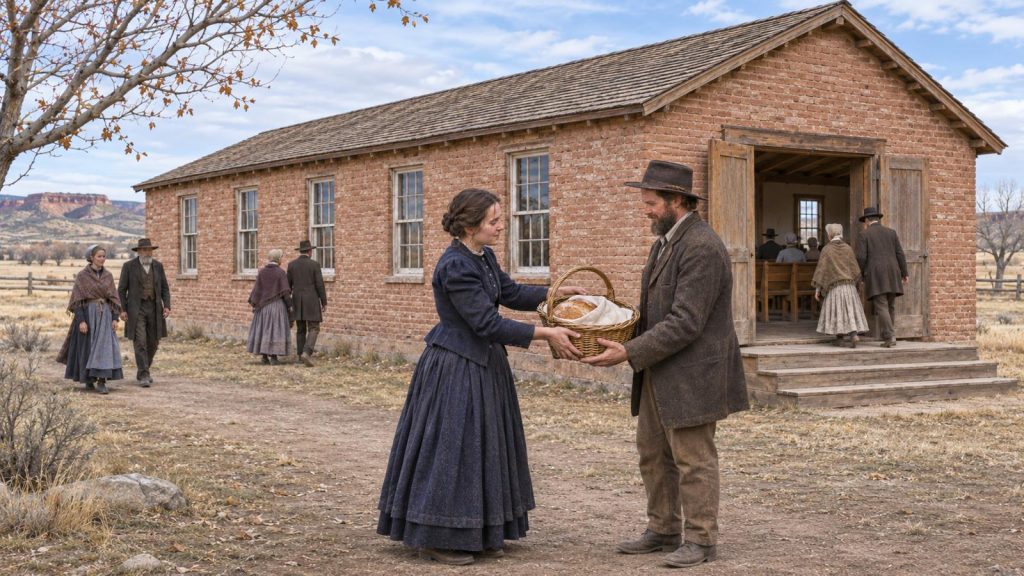
On Thursday, December 3, 1896, George F. Richards unloaded two loads of brick and hauled sand in Tooele, Utah. Three days later, he wrote in his diary that he and most of his family had fasted until five in the afternoon. It was their first Fast Sunday under a new Churchwide schedule.
Richards was a farmer and local Church leader, a decade away from becoming an apostle. His diary captures the change in two ordinary entries: work on a Thursday, a family fast on a Sunday. Until then, the first Thursday of the month had long been the regular fast day in Utah.
When fast day fell in the middle of the week
After the Kirtland Temple was dedicated in 1836, leaders of The Church of Jesus Christ of Latter-day Saints designated the first Thursday of the month as a fast day. The meetings included sermons, testimonies, and donations for people in need. The records show that Thursday was in use, but they don’t clearly explain why it was chosen.
The Saints revived the monthly Thursday fast after settling in the Salt Lake Valley. Early on, when employers and workers often belonged to the same church, it was easier to pause work for the meeting. As Utah’s towns grew and more people worked outside agriculture, a Thursday meeting became harder to attend. By 1896, the Church’s First Presidency noted that attendance had dwindled, especially among people with steady jobs.
Why the Church moved fast day to Sunday
On November 5, 1896, Joseph F. Smith proposed moving the meeting to the first Sunday of each month, and George Q. Cannon supported it. There was already a precedent: Latter-day Saints in Great Britain had been observing the fast on Sundays. A later account from general conference tells of miners near Newcastle who lost pay when they took Thursdays off. The First Presidency’s announcement pointed to the broader problem: too many people couldn’t get away from work.
The leaders also changed where Salt Lake City members would meet. Instead of gathering at the Tabernacle, the city’s central meeting hall, they could attend in their own wards, or local congregations. The announcement specifically mentioned older people and others who couldn’t make the trip downtown.
What didn’t change
The First Presidency described fasting and prayer as ways to seek faith and cultivate humility. That devotion had a practical expression: a fast offering could be the food a family went without or its value in money. The 1896 announcement asked members to give the food they would have used for two meals, and more if they had the means.
Fast and testimony meeting is still usually held on the first Sunday of the month. Richards’s diary gives that familiar Sunday a date and a place: December 6, 1896, in Tooele. The brickwork had taken up his Thursday. Sunday was the day he recorded fasting with his family.
Sources
- George F. Richards’s diary, December 3 and 6, 1896 and biographical introduction
- Historian’s Office Journal, November 5 and 7, 1896 and First Presidency’s circular
- Church History Topics: Fasting
- Church History in the Fulness of Times: An Era of Reconciliation and “The Law of the Fast,” October 1974 general conference
- General Handbook, section 29.2.2: Fast and Testimony Meeting