
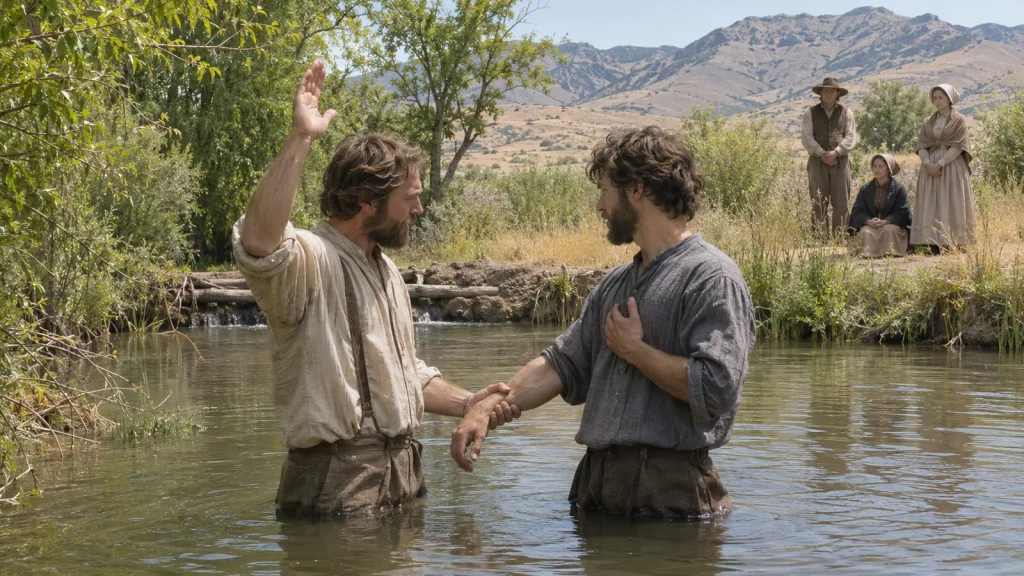
On August 6, 1847, Brigham Young went into the water in the Salt Lake Valley and baptized the apostles who were there with him. Then Heber C. Kimball baptized Brigham Young.
They were already members of the Church. Young had led the first pioneer company west, and the men he baptized were his fellow apostles. So why were they getting baptized again?
Wilford Woodruff was there. In his journal, he explained that they wanted to renew their covenant “before the Lord and each other.” They had reached the valley where they intended to build a temple and establish Zion. Baptism gave them a way to mark that new beginning.
Why Baptism Again?
Under Joseph Smith in Nauvoo, Illinois, some Church members had already been baptized again for the remission of sins. After the pioneers reached the Salt Lake Valley, Brigham Young encouraged those arriving in the Great Basin to renew their covenants by being baptized again. They were recommitting themselves to promises they had already made, not joining the Church a second time.
The practice did not end with the first pioneer company. During the Latter-day Saint reformation of 1856–57, an intense campaign of repentance and recommitment, some congregations were urged to be rebaptized together. Some Saints were also rebaptized before receiving temple ordinances or joining a United Order, a cooperative community. The Church’s historical overview says that most nineteenth-century Latter-day Saints in Utah were rebaptized for covenant renewal several times in their lives.
Why Did the Church Move Away From It?
By the 1890s, leaders were concerned that rebaptism had become routine and that some members were treating it as a substitute for repentance. In 1893, stake presidents were told not to require rebaptism for members who wanted to attend the Salt Lake Temple dedication.
Writing in the Juvenile Instructor in 1895, George Q. Cannon urged members to confess wrongdoing and seek forgiveness before taking the sacrament rather than assume they needed another baptism. At general conference in October 1897, he said the First Presidency and the Twelve felt “that so much re-baptism ought to be stopped.”
That makes 1897 a turning point, not a clean cutoff. Historians Jonathan Stapley and David Grua found that the Logan Temple continued to record baptisms for covenant renewal for about another decade. The Church’s historical overview describes a gradual phaseout and notes that leaders put greater emphasis on the sacrament as a way to renew covenants.
Is That the Same as Being Baptized Again Today?
The current General Handbook still provides for baptism and confirmation when a former member is readmitted after resigning or having their membership withdrawn. That is different from what happened in the Salt Lake Valley in 1847. The people in Woodruff’s account were not rejoining the Church. They were renewing commitments they had already made.
For the pioneers in that valley, a new beginning meant going into the water again. For Latter-day Saints today, an opportunity to renew their covenants comes as the sacrament tray reaches their pew.
Related: Have You Been Taking the Sacrament With the Wrong Hand?
Sources
- Wilford Woodruff’s journal, August 5–6, 1847
- “Rebaptism,” Church History Topics
- Jonathan A. Stapley and David W. Grua, “Rebaptism in The Church of Jesus Christ of Latter-day Saints,” BYU Studies Quarterly
- George Q. Cannon, “Concerning Baptism,” Juvenile Instructor, April 15, 1895, excerpt at the University of Virginia
- George Q. Cannon, October 6, 1897 general conference address, excerpt at the University of Virginia
- “An Era of Reconciliation,” Church History in the Fulness of Times
- General Handbook, section 32.16, Readmission to the Church