
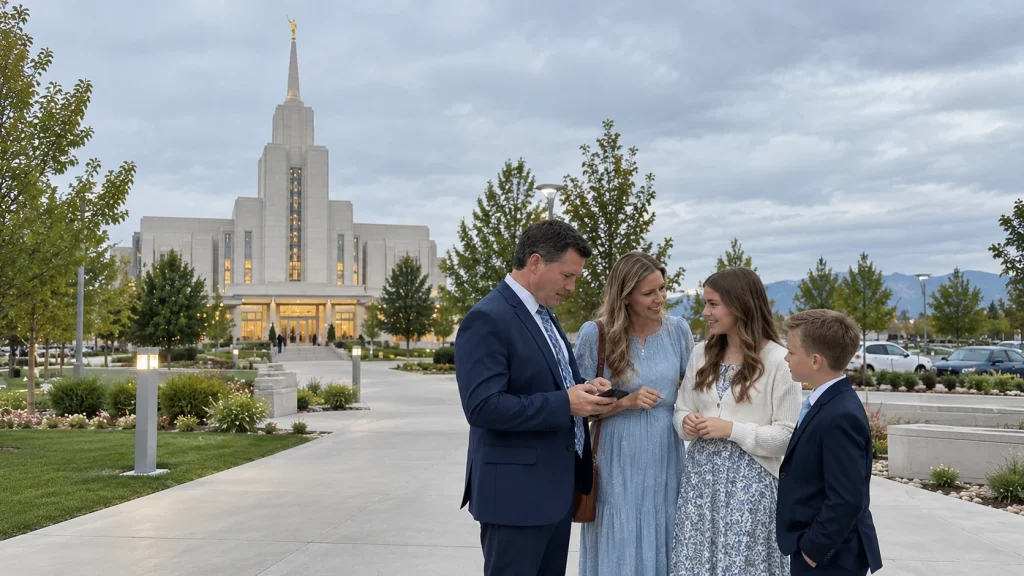
The October 2026 update brings new guidance on temple sealings, reservations, child safety, missionary service, and Sunday meetings. Here’s what Latter-day Saints need to know.
Do you need a reservation for your next temple visit? What if your child wants to attend a family sealing?
The Church of Jesus Christ of Latter-day Saints updated its General Handbook on October 22, 2026, clarifying both questions — along with several other policies affecting families, missionaries, and ward leaders.
The update also includes stronger language about child safety in Primary, new options for children’s devotionals, and additional responsibilities for supporting members with disabilities.
Here are eight changes members should know about — including which instructions are new and which clarify or incorporate existing practices.
1. Temple Reservations: When Do You Actually Need One?
What changed: Clarification
Members planning a temple visit may notice an important distinction in the updated handbook.
Those receiving their own temple ordinances must make a reservation with the temple.
However, members performing ordinances on behalf of deceased individuals may attend with or without a reservation.
The handbook also replaces the term “appointment” with “reservation” in relevant sections.
What this means for members
Imagine you have an unexpected free afternoon and want to visit the temple to perform ordinances for deceased ancestors.
The handbook confirms that you may attend without a reservation, although making one can still help with scheduling and preparation.
If you are preparing to receive your own endowment or another ordinance for yourself, however, a reservation is required.
Practical takeaway: Before visiting, check your temple’s current schedule and reservation options, especially if you are receiving an ordinance for yourself.
Handbook references: 25.1.1 and 28.1.4.
2. Children Attending Family Sealings: An Important Recommend Clarification
What changed: New and clarified guidance
For families preparing for a temple sealing, one of the most relevant updates concerns children who wish to observe certain ordinances.
The handbook now specifies that children preparing to observe the sealing of their living siblings to their parents must meet with their bishop to receive a temple recommend for living ordinances.
The October update also clarifies attendance procedures, adds guidance on appropriate clothing for the sealing of living children to parents, and addresses the participation of members with intellectual disabilities in certain family sealings.
What this means for families
Suppose parents are preparing for a temple sealing involving their children, and another child hopes to observe the ordinance.
Rather than assuming that an existing recommend or previous arrangements will be sufficient, the family should speak with their bishop and the temple beforehand.
The specific type of ordinance and each child’s circumstances matter.
Importantly, the update does not mean that all children can attend every temple sealing. It provides more precise instructions for particular family situations.
Practical takeaway: Before your family’s sealing, contact your bishop and the temple to confirm which recommends and arrangements your children will need.
Handbook references: 26.1, 26.3.3, and 27.1.2.
3. Primary Safety: Physical Discipline Is Never Acceptable
What changed: Explicitly strengthened language
One of the clearest additions appears in the Primary chapter.
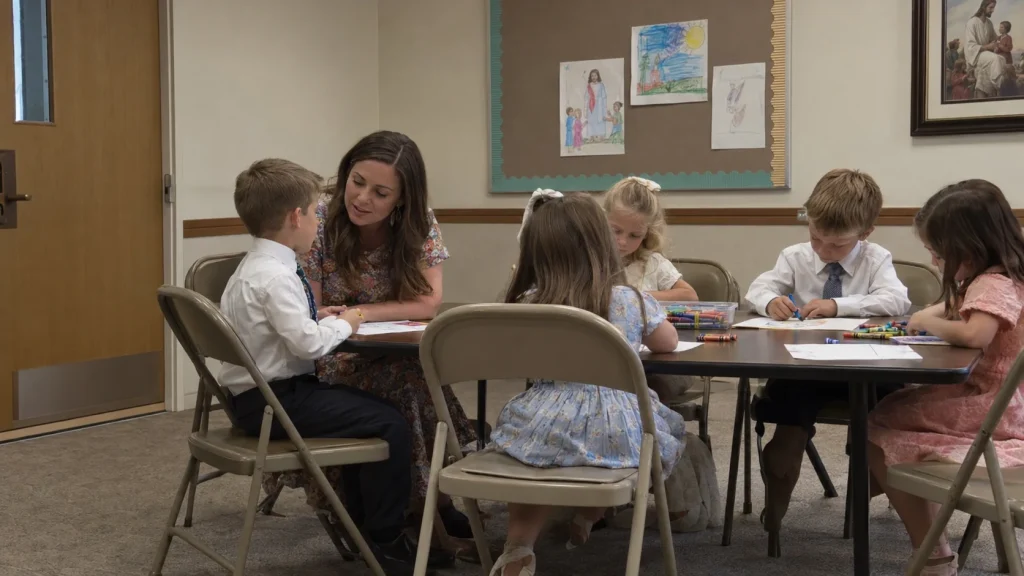
Section 12.5.1, Safeguarding Children, now explicitly states that using or threatening to use physical discipline in Primary is never acceptable.
This applies to the environment in which children participate in Church instruction and activities.
The update makes the expectation unmistakable for those serving with children.
What this means for Primary leaders and teachers
A teacher dealing with disruptive behavior must use appropriate, nonphysical ways to respond.
Physical punishment and threats of physical punishment are not acceptable responses.
The clarification should not be interpreted as evidence that physical discipline was previously permitted. Rather, the handbook now states the prohibition more explicitly.
A separate October update also requires members called as temple workers to complete children and youth protection training.
Together, these revisions reinforce responsibilities for protecting children and youth in Church settings.
Practical takeaway: Primary leaders and teachers should review the updated safeguarding instructions and ensure their approach to classroom discipline is consistent with Church policy.
Handbook reference: 12.5.1.
4. Children’s Devotionals: A New Option for Wards and Stakes
What changed: New option
Wards and stakes now have an additional option for helping children participate in gospel-centered experiences.
Section 12.2.1.3 allows them to hold children’s devotionals.
The guidance appears in the Primary chapter under service and activities.
What this means for families and leaders
A ward or stake may consider organizing a devotional specifically for children as part of its efforts to help them learn and grow spiritually.
This does not create a new required weekly meeting or mean that every ward must hold children’s devotionals.
It is an option for local leaders to consider according to their circumstances.
The handbook also clarifies that Primary activities may, as an exception, be scheduled after Sunday meetings under section 20.5.8.
For Primary presidencies, these changes provide additional flexibility without introducing new mandatory programs.
Practical takeaway: Primary presidencies can review the new guidance with their bishopric when planning activities and spiritual experiences for children.
Handbook references: 12.2.1.3 and 20.5.8.
5. Missionaries Returning Home Early: Who Makes the Decision?
What changed: Clarified leadership responsibilities
The October update also revises several sections related to missionary service.
One clarification concerns missionaries who may need to return home before completing their anticipated service.
Section 24.6.3.2 now specifies that a missionary’s stake president, mission president, and area president counsel together to determine whether the missionary should remain in the mission field or return home.
The update clarifies which leaders participate in this decision.
Other missionary-related revisions account for missionaries serving from home and replace certain references to “service missions” with “service assignments.”
What this means for missionaries and families
When a missionary faces circumstances that may require an early return, the decision involves consultation among designated Church leaders.
This is especially important for families trying to understand how such decisions are handled.
The clarification does not establish that every early return is related to worthiness or misconduct.
Missionaries may face a variety of personal circumstances, and the handbook provides administrative guidance for leaders responsible for their service.
Practical takeaway: Missionaries and families facing a possible early return should work with their designated Church leaders rather than assuming the decision rests with one individual.
Handbook reference: 24.6.3.2.
6. Supporting Members With Disabilities: More Leaders Have Defined Responsibilities
What changed: Expanded responsibilities
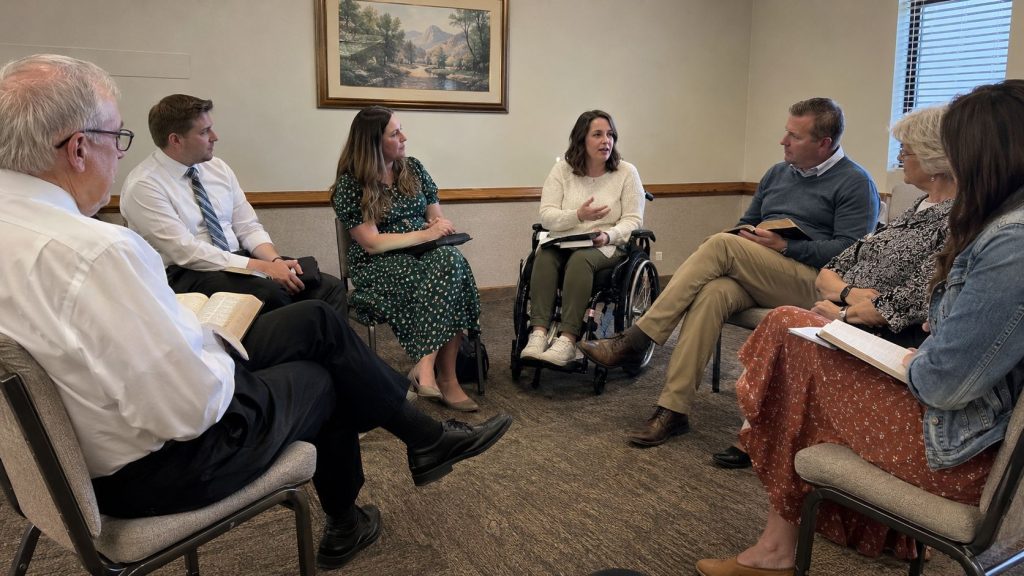
The Church has expanded guidance about supporting members with disabilities.
The October revisions add or clarify responsibilities in several organizations, including Relief Society, elders quorums, Aaronic Priesthood quorums, Young Women, Primary, and Sunday School.
The handbook also updates the responsibilities of disability specialists.
Rather than treating disability support as the responsibility of a single specialist, the revised instructions make clear that multiple Church leaders share responsibility for helping members participate.
What this means for wards
Consider a young person with a disability who wants to participate more fully in Sunday classes or Church activities.
Under the updated guidance, supporting that individual is not simply a matter for a disability specialist.
Organization leaders also have responsibilities to consider members’ needs as they plan instruction, activities, and opportunities to serve.
The practical details will differ from ward to ward, but the handbook now makes these leadership responsibilities more explicit.
Practical takeaway: If a family member needs accommodations to participate in Church classes or activities, speak with the relevant organization presidency about possible arrangements.
Handbook references: Chapters 6–12 and section 38.8.28.9.
7. Young Women: New Age-Group Names Are Now in the Handbook
What changed: Previously announced changes incorporated into the handbook
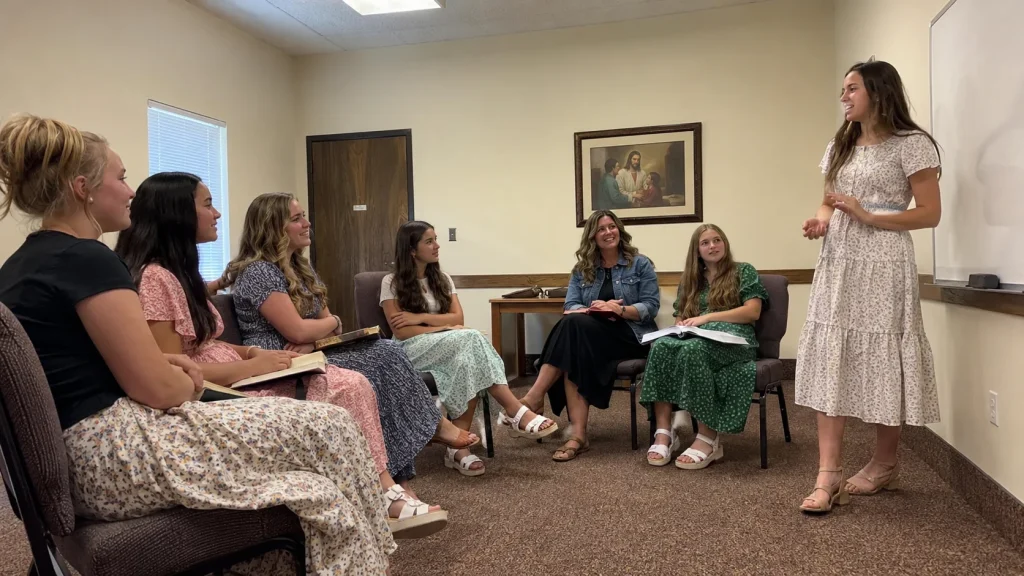
The October update formally incorporates new terminology for the Young Women organization.
The handbook now uses the term “age-groups” instead of “classes.”
It also includes three new age-group names:
- Builders of Faith
- Messengers of Hope
- Gatherers of Light
Chapter 11 now contains separate sections for these age-groups, along with guidance for adapting the organization to local needs.
What this means for young women and leaders
The changes affect how the organization is described in official instructions and how leaders refer to its groups.
For example, Young Women leaders reviewing chapter 11 will now find the new names and age-group structure reflected in the handbook.
However, this should not be presented as a completely new announcement made on October 22.
The names were announced previously. The October revision incorporates them into the official handbook.
Practical takeaway: Young Women leaders can review chapter 11 to ensure their materials and organization reflect the updated terminology.
Handbook reference: Chapter 11.
8. Sunday Meetings: The Handbook Now Reflects the September Changes
What changed: Previously announced schedule incorporated into the handbook
The October update also revises instructions for Sunday meetings.
These changes reflect the schedule announced by the First Presidency in March 2026 and implemented beginning September 6.
Under that schedule, Sunday School, Relief Society, elders quorum, Young Women, and Aaronic Priesthood quorum meetings take place every week rather than alternating by week.
Sacrament meeting remains 60 minutes.
Sunday School and quorum or class meetings are each 25 minutes, while Primary continues for 55 minutes.
The handbook now reflects this arrangement in its instructions for meeting schedules, gospel learning, and teacher council meetings.
What this means for members
For most members, this is not another schedule change.
The updated handbook simply brings official written guidance into alignment with the meeting format already in use.
Teachers and organization leaders can consult the revised sections for instructions that reflect the current Sunday schedule.
This distinction matters because the October handbook revision should not be confused with a new announcement changing Sunday meetings again.
Practical takeaway: Teachers and organization leaders should consult the revised handbook sections when planning lessons and meetings under the current Sunday schedule.
Two Additional Updates Worth Knowing
Beyond these eight changes, the October release includes two administrative developments that may interest members serving in specialized callings.
Canada Now Has Its Own Area Office
The handbook reflects an administrative change involving the Church in Canada.
Many references that previously said “the United States and Canada” now refer only to the United States.
The Canada Area has its own area office and is no longer supported directly from Church headquarters in the same way.
For most administrative purposes, Church leaders in Canada should now contact their area office for assistance.
This change is particularly relevant to local leaders who need administrative support.
Chaplains and Military Relations Are Now Separate Sections
The former handbook section titled Military Relations and Chaplain Services has been reorganized.
It is now divided into two separate sections:
- Section 38.9 — Chaplains
- Section 38.10 — Military Relations
The Church has also substantially revised the guidance in both areas.
The changes provide more distinct instructions for chaplains and for leaders supporting military members and their families.
Where Can Members Read the Updated General Handbook?
The October 2026 revisions are available on the Church’s official website and in the Gospel Library app.
The Church has also published a Summary of Recent Updates, identifying the chapters and sections that were changed.
Members can review the official documents here:
- October 2026 General Handbook Update — Church Newsroom
- Summary of Recent Updates — General Handbook
- General Handbook: Serving in The Church of Jesus Christ of Latter-day Saints
For questions involving temple ordinances, recommends, missionary service, or Church callings, members should consult the relevant handbook section and their local leaders.
What Is the Biggest Takeaway From the October 2026 Update?
The October revisions do not represent one sweeping change to Church doctrine or worship.
Instead, they address a range of practical situations that members and leaders encounter in everyday Church life.
For families, the most immediate questions may involve temple reservations and children attending sealings.
For those serving in Primary, the updated instructions emphasize safeguarding children and provide an additional option for children’s devotionals.
For missionaries and their families, the handbook clarifies how leaders counsel together about early returns.
And for ward leaders, the revisions provide more detailed responsibilities for supporting members with disabilities.
Not every handbook update creates a new rule. Some changes introduce instructions, while others clarify existing practices or incorporate announcements already in effect.
Understanding that distinction can help Latter-day Saints know what has actually changed — and what they may need to do differently.
Sources: The Church of Jesus Christ of Latter-day Saints, “The Latest Updates to the General Handbook: October 2026,” October 22, 2026; “Summary of Recent Updates,” General Handbook; and the First Presidency’s March 2026 announcement on Sunday meeting schedules.