
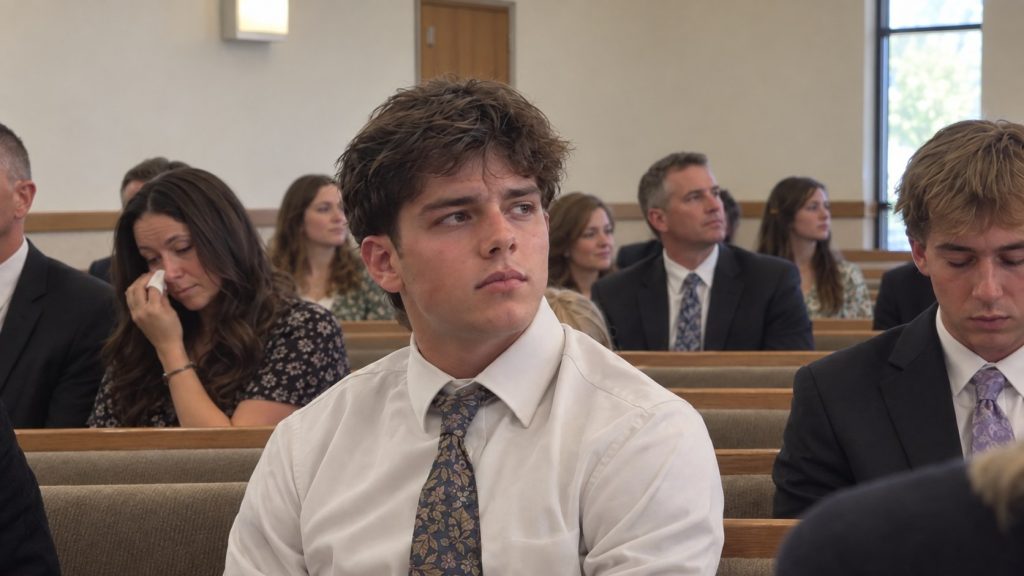
Everyone else seemed sure. I nodded.
“The Spirit is so strong in here.”
Someone says it after the hymn.
A person a few seats away is crying. Someone else closes their eyes. Your friend leans toward you and whispers:
“Did you feel that?”
You wait.
For warmth.
Peace.
A burning in your chest.
Anything that would let you say, Yes. That was Him.
Nothing comes.
So maybe you nod.
Not because you are trying to be dishonest.
You just don’t know what else to do.
Nobody teaches you what to do with your face when you feel nothing.
Maybe it happens again in the temple.
At youth conference.
During a testimony meeting.
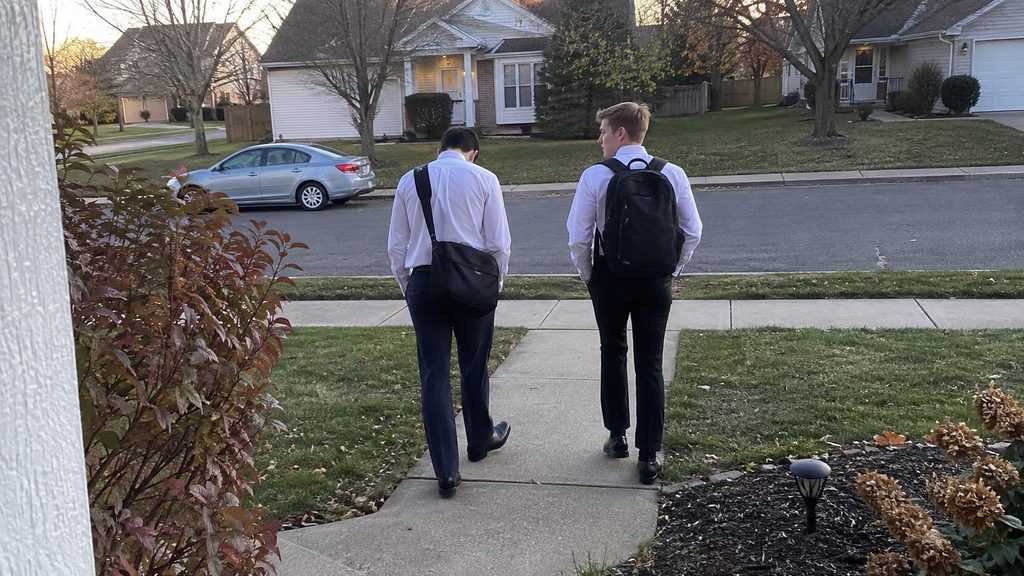
On your mission, when your companion walks out of a lesson visibly moved and you are mostly thinking about what happens next.
Maybe the missionaries ask how you felt after praying about the Book of Mormon, then smile as if the answer should already be obvious.
You search yourself.
Peace?
Warmth?
Something?
And after enough moments like that, the silence starts asking questions for you.
Why does everyone else seem to know what this feels like?
Am I doing something wrong?
Am I not spiritual enough?
Is there something I need to repent of?
And eventually:
What if I have never felt the Holy Ghost at all?
That question can be surprisingly lonely in a church where people talk about feeling the Spirit all the time.
When someone else’s testimony becomes your measuring stick
A woman describes the exact moment she knew.
A returned missionary remembers a lesson when “the Spirit filled the room.”
Someone says they felt something the first time they entered a temple.
Those experiences may be completely real.
The problem begins when, without meaning to, you turn them into instructions.
That is what revelation is supposed to feel like.
That is what spiritual people experience.
That is what should happen to me.
And suddenly someone else’s beautiful experience has become evidence against your own.
Someone else’s testimony can be a witness. It does not have to become a template.
This is not some rare private defect. Church magazines have called “Is it the Holy Ghost, or is it me?” one of the most common questions youth and adults ask. (churchofjesuschrist.org)
So perhaps the question is not only:
Why can’t I feel Him?
Perhaps it is:
What exactly have I been waiting to feel?
Maybe the word “feel” became too small
Latter-day Saints use that word constantly.
Feel the Spirit.
Feel peace.
Feel confirmation.
Feel a burning in the bosom.
And feelings absolutely can accompany revelation.
But official missionary teaching describes more than a feeling in the chest: thoughts, understanding, impressions, desires, and guidance that may come slowly rather than dramatically. (churchofjesuschrist.org)
So you may have been waiting only for this:
| You were waiting for | Spiritual guidance can also look like |
|---|---|
| Fire in your chest | Quiet peace after a difficult choice |
| An unmistakable voice | A thought that keeps returning |
| Tears | A growing desire to do something good |
| One dramatic answer | Understanding that develops slowly |
| Feeling spiritual all day | One small prompting when you need it |
| Absolute certainty | Enough light to take the next step |
This is not a checklist for calling every thought revelation.
It is permission to stop rejecting an experience simply because it did not arrive in the form you expected.
The person next to you crying does not settle the question
Tears are powerful.
So is music.
So is silence.
So is being surrounded by people you love.
And sometimes the Holy Ghost absolutely does bring strong emotion.
But Preach My Gospel includes a warning from President Howard W. Hunter that strong emotion and tears should not automatically be confused with the presence of the Spirit itself. (churchofjesuschrist.org)
The person beside you cries during the hymn.
You don’t.
That tells you almost nothing about which one of you is closer to God.
You do not need to dismiss their tears.
And you do not need to manufacture your own.
Am I feeling something yet?
Is this peace?
Should I be crying?
Why am I not crying?
Sometimes the pressure to identify the “right” feeling becomes louder than the moment itself.
Spiritual things cannot be forced.
You can seek. You can pray. You can make room.
You cannot manufacture revelation on schedule.
What if nothing ever “burned”?
Doctrine and Covenants 9 speaks of a “burning in the bosom.”
So you pray.
And wait.
Nothing burns.
Maybe you wait for years.
Dallin H. Oaks once asked whether that phrase must mean literal “caloric heat.” If so, he said, he had never experienced a burning in the bosom himself.
He described the experience instead in terms of comfort and serenity. (churchofjesuschrist.org)
Someone could spend twenty years assuming they failed a spiritual test that was never the test.
Some people really do describe warmth.
Some cry.
Some receive immediate certainty.
Their experience does not need to become smaller for yours to become legitimate.
Maybe you were waiting for a light switch
David A. Bednar once compared revelation to turning on a light in a dark room.
Suddenly you can see.
The answer is clear.
Those experiences happen.
But he said this immediate, intense pattern “tends to be more rare than common.”
More often, revelation can be like sunrise.
The horizon gets brighter gradually.
You cannot identify the exact second when darkness became morning.
Eventually, you simply realize that you can see. (churchofjesuschrist.org)
Light-switch experiences make excellent testimonies:
“I prayed, and suddenly I knew.”
But this story is harder to tell:
“I prayed. Nothing dramatic happened. I kept moving. Something slowly became clearer. Months later I realized I was not in the same place anymore.”
Yet that may matter just as much.
Maybe you were waiting for a light switch while revelation was coming like morning.
Four words in the Book of Mormon are easy to miss
In 3 Nephi 9, Jesus Christ describes people who had been baptized with fire and with the Holy Ghost.
Then He says:
“and they knew it not.” (churchofjesuschrist.org)
That does not give anyone permission to tell you:
“You felt it. You just didn’t know.”
Maybe you did.
Maybe you didn’t.
But those four words leave room for something important:
A spiritual experience does not always arrive with a label attached.
Sometimes understanding comes afterward.
What does this say about me?
Maybe this is the question underneath everything else.
Why don’t I feel what everyone else feels?
Maybe you start looking for the reason.
A forgotten sin.
A weakness.
Something you did when you were sixteen.
Maybe God is withholding something because He is disappointed in you.
Our choices matter. Repentance matters. Covenant keeping matters.
But there is no worthiness chart that says:
Warmth = worthy.
Tears = worthy.
Burning = worthy.
Nothing noticeable = unworthy.
So repent where repentance is needed.
Change what needs changing.
But do not invent a sin because you could not reproduce somebody else’s spiritual experience.
Try asking one different question

For a week, stop asking only:
“Did I feel the Spirit?”
Ask:
“What stayed with me?”
After prayer.
After scripture.
After sacrament meeting.
After an important decision.
Maybe the answer is:
Nothing.
Let it be nothing.
But maybe it is a sentence you keep remembering.
A person who comes to mind.
A desire to apologize.
A warning to wait.
A scripture that suddenly means something different.
Enough peace to take one step even though you cannot see ten.
Do not immediately label it revelation.
Notice it.
Then ask what direction it points.
Toward Christ?
Toward truth?
Toward repentance?
Toward kindness?
Toward something good?
Then act where the next step is safe and clear.
Later, look back.
Maybe recognizing the Spirit is sometimes less about detecting a particular sensation and more about learning to notice, test, act, and look back.
And what if the answer is still nothing?
Then maybe the most honest prayer you can offer is:
“Heavenly Father, I still don’t know how You speak to me.”
That is a real prayer.
You do not need to turn uncertainty into a testimony before you have one.
And you do not need to turn uncertainty into proof that God has rejected you.
Maybe someday you will describe fire.
Maybe peace.
Maybe a thought.
Maybe you will recognize something only years later.
Maybe you are still learning.
For now, this may be enough:
“I don’t know what the Holy Ghost feels like to me yet.”
There is no shame in the word yet.
You do not need to manufacture tears.
You do not need to call every emotion revelation.
And you do not need to dismiss every quiet impression because it was not dramatic enough.
The Spirit is not a mood you failed to manufacture.
Where were you the first time you realized the room was “full of the Spirit” — and you weren’t sure you felt anything?
Mission? Sacrament meeting? Temple? Seminary? Youth conference? Somewhere else?