
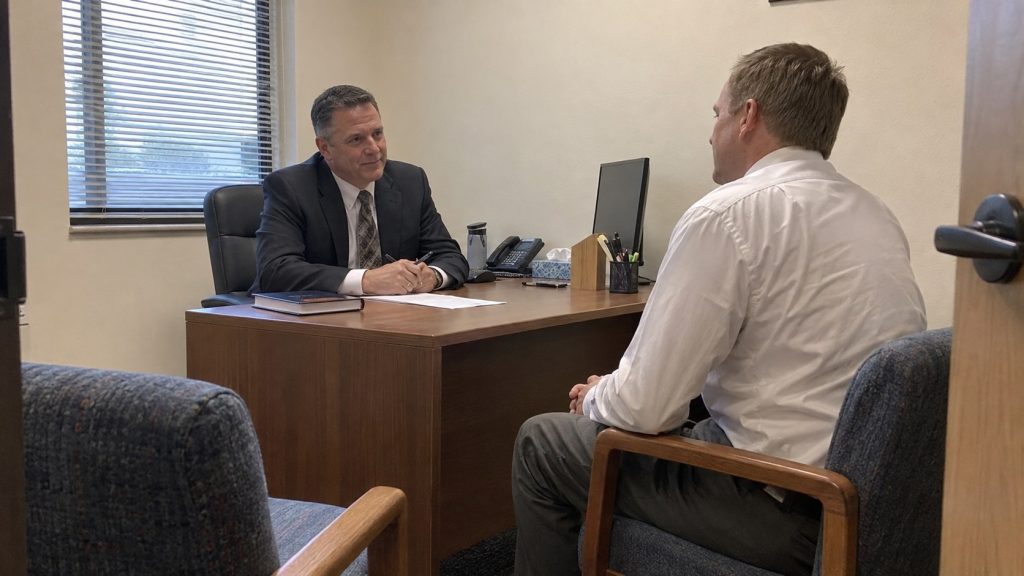
In The Church of Jesus Christ of Latter-day Saints, a calling is an invitation to serve in a specific Church responsibility. Leaders prayerfully determine whom to call, extend the calling privately, present the person for sustaining, and usually have the member set apart before service begins. Most local Church callings are unpaid and temporary, and members are eventually released.
This guide focuses on local callings in wards and stakes. A full-time missionary calling follows a different process. The same topic is sometimes searched for as “Mormon Church callings.”
What Is a Calling in the LDS Church?
A Church calling is a responsibility or position in which a member is invited to serve other people and help with the work of the Church.
Examples range from teaching a Primary class or helping with music to serving in a Relief Society presidency, elders quorum presidency, bishopric, or another ward or stake responsibility.
A calling is not treated as a job application or a promotion. Members generally do not apply for particular positions, and moving from one calling to another is not considered moving “up” in the Church.
The General Handbook specifically teaches that members should not aspire to particular callings. The emphasis is on serving faithfully rather than on the prominence of a position.
Are LDS Church Callings Paid?
Most local ward and stake callings are unpaid volunteer service.
A Sunday School teacher, Primary leader, Relief Society president, ward clerk, bishopric counselor, or most other people serving in local Church callings are not employees receiving a salary for that calling.
That should not be confused with Church employment or other full-time positions that operate under different arrangements.
Is a Calling the Same as a Church Job?
No. A local Church calling is a religious service responsibility rather than regular employment.
A member may spend significant time fulfilling a calling, but the calling itself generally does not create an employer-employee relationship. Members normally continue their regular jobs, education, family responsibilities, and other activities while they serve.
How Are LDS Church Callings Chosen?
Church leaders prayerfully seek inspiration when deciding whom to call while also considering the member’s worthiness, abilities, personal circumstances, health, employment, and family situation.
The process is not supposed to be based simply on who appears available.
The General Handbook tells leaders to consider:
- the member’s worthiness;
- gifts and abilities the member has or could develop;
- personal circumstances, including health and work;
- the impact the calling may have on marriage and family.
Each calling should bless the people being served, the member who serves, and the member’s family.
Church guidelines also say that a calling should not place an undue burden on an individual or family or make it difficult for someone to fulfill employment responsibilities.
Generally, a member has one Church calling at a time, in addition to serving as a ministering brother or sister. Exceptions may occur, but the Handbook says they should be rare and prayerfully considered.
A ward or stake also does not need to fill every possible calling simply because the position exists.
Does the Bishop Choose Every Calling?
No.
The bishop has major responsibility for callings in a ward, but he does not personally originate every recommendation or make every decision by himself.
Depending on the position, quorum or organization leaders may prayerfully recommend someone to the bishopric or stake presidency. Bishops and stake presidents consider those recommendations, while the bishopric or stake presidency retains final responsibility for determining whom to call.
Different positions also require different levels of approval.
For example, the process for calling a Primary teacher is not identical to the process for calling a bishop, elders quorum president, or stake leader.
The Church’s official Chart of Callings identifies who recommends, approves, sustains, extends, and sets apart members for particular positions.
Do LDS Members Choose Their Own Callings?
Usually, no.
Members can talk with Church leaders about their abilities, circumstances, interests, or difficulties, but the normal process is for an authorized leader to extend an invitation rather than for a member to apply for a particular position.
Do Latter-day Saints Believe Callings Come from God?
Yes. Latter-day Saints believe Church callings should be made through inspiration and that people are called to serve God through authorized Church leaders.
That does not mean practical circumstances are ignored.
The official process specifically requires leaders to consider personal circumstances and to determine whether a member is worthy and willing to serve.
How Does the LDS Calling Process Work?
Although details vary depending on the position, most local LDS Church callings follow a basic sequence.
The LDS Calling Process
1. Leaders determine whom to call
An authorized leader or organization prayerfully considers who might serve in a particular responsibility. Some positions involve recommendations and additional approvals.
↓
2. The calling is extended privately
After the necessary approvals, an authorized leader meets privately with the member and formally extends the calling.
↓
3. The member accepts or considers the invitation
The member can discuss the responsibilities and personal circumstances with the leader. If needed, the member may be given time to prayerfully consider the calling.
↓
4. The member is sustained
For most callings, the person is presented to the appropriate group of Church members for sustaining.
↓
5. The member is set apart
Those called to most Church positions are then set apart by an authorized priesthood leader.
↓
6. The member serves until released
The member serves in the calling until an authorized leader releases him or her.
The exact leaders involved vary by calling, but this basic sequence explains how most ward and stake callings work.
What Happens in an LDS Calling Interview?
When a Church leader extends a calling, the meeting is an opportunity to explain the responsibility and determine whether the member’s circumstances allow him or her to serve.
The conversation may include:
- the purpose and responsibilities of the calling;
- the people the member will serve;
- available training and resources;
- meetings the person may need to attend;
- who will provide support;
- who the member reports to;
- approximately how much time the calling may require;
- special concerns or challenges connected with the calling, including required protection training for those who will work with children or youth.
Members who work with children or youth are instructed to complete the Church’s Protecting Children and Youth training within one month of being sustained and repeat it every three years.
The member can also ask questions and explain circumstances that the leader may not know about.
For example, health problems, work schedules, caregiving responsibilities, family situations, or other significant commitments may affect someone’s ability to accept or fulfill a calling.
Can You Ask Questions About a Calling?
Yes.
A member can ask what the calling involves, what training is available, how much time it normally requires, who will provide support, or what challenges to expect.
Church leaders are specifically instructed to help members understand a calling when extending it and to answer questions the member may have.
Can You Ask for Time to Think About a Calling?
Yes.
If needed, a leader may give a member time to prayerfully consider the calling and seek personal spiritual confirmation before responding.
Do You Have to Accept an LDS Church Calling?
No. A calling is an invitation to serve, not an order that ignores a member’s circumstances.
When extending a calling, the authorized leader is instructed to counsel with the member to determine whether his or her circumstances allow service and whether the member is worthy and willing to serve.
Health, employment, marriage, family responsibilities, and other serious circumstances can all be relevant.
The Handbook also states that a calling should not place an undue burden on individuals or families or make it difficult for a member to fulfill employment responsibilities.
Can You Decline a Church Calling?
Yes. A member can tell the leader extending the calling that he or she is unable or unwilling to accept it.
The official process includes counseling with the member rather than simply assigning a position without considering the person’s circumstances.
For some members, accepting a calling may involve meaningful sacrifice. In other situations, health, family responsibilities, employment, or another circumstance may make the calling impractical.
The most useful approach is usually to explain those circumstances directly rather than assuming that the leader already knows about them.
What If Work, Health, or Family Makes the Calling Difficult?
Tell the leader who is extending the calling.
Church guidelines specifically instruct leaders to consider health and employment as well as the effect a calling could have on a member’s marriage and family.
That conversation may lead to clarification, adjustments, additional time to consider the invitation, or a different decision.
What Does It Mean to Sustain Someone in a Calling?
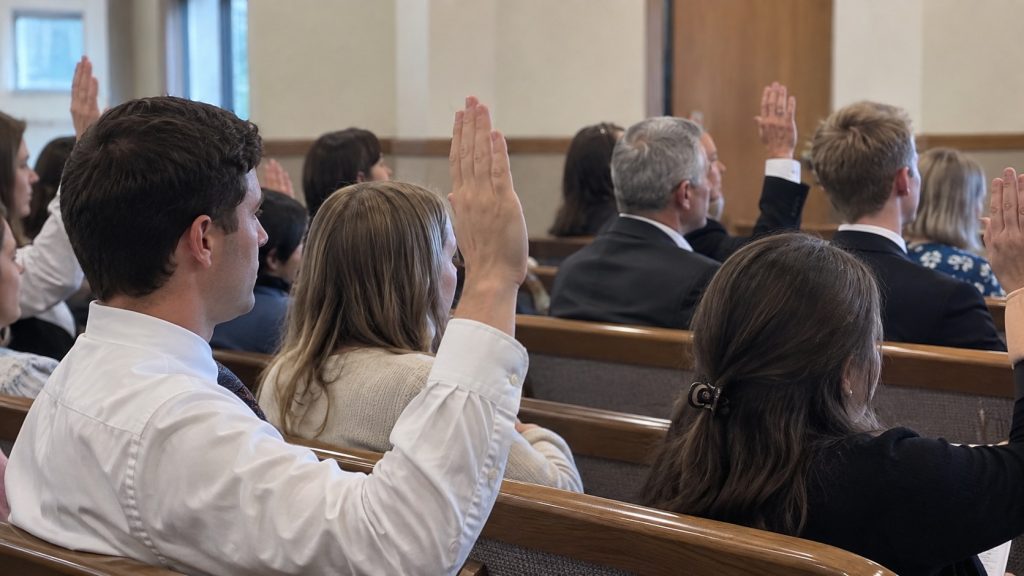
To sustain someone in a Church calling means that members publicly indicate their support for the person who has been called and their willingness to help that person serve.
Those called to most Church positions are presented for sustaining before they begin serving.
Depending on the calling, sustaining may take place in sacrament meeting, stake conference, a quorum or organization meeting, or another appropriate setting.
Is Sustaining the Same as Voting?
Not exactly.
Sustaining is not intended to work like a competitive election in which several candidates campaign for a position and whoever receives the most votes wins.
The calling has normally already been prayerfully considered, approved, and extended before the sustaining takes place.
Members are then invited to express their support for the person who has been called.
What Happens If Someone Opposes a Calling?
If a member in good standing opposes a calling, a presiding leader or another assigned priesthood leader meets privately with that member after the meeting to understand the reason.
The leader may ask whether the member knows of conduct that could disqualify the person from serving in the position.
If the opposing member does not know of such conduct, he or she is encouraged to sustain and support the person who has been called.
The matter is handled privately rather than debated publicly during the meeting.
A nonmember or a member who is not in good standing may also privately share concerns with the bishop or stake president, although only members in good standing participate in the sustaining.
What Does It Mean to Be Set Apart for a Calling?
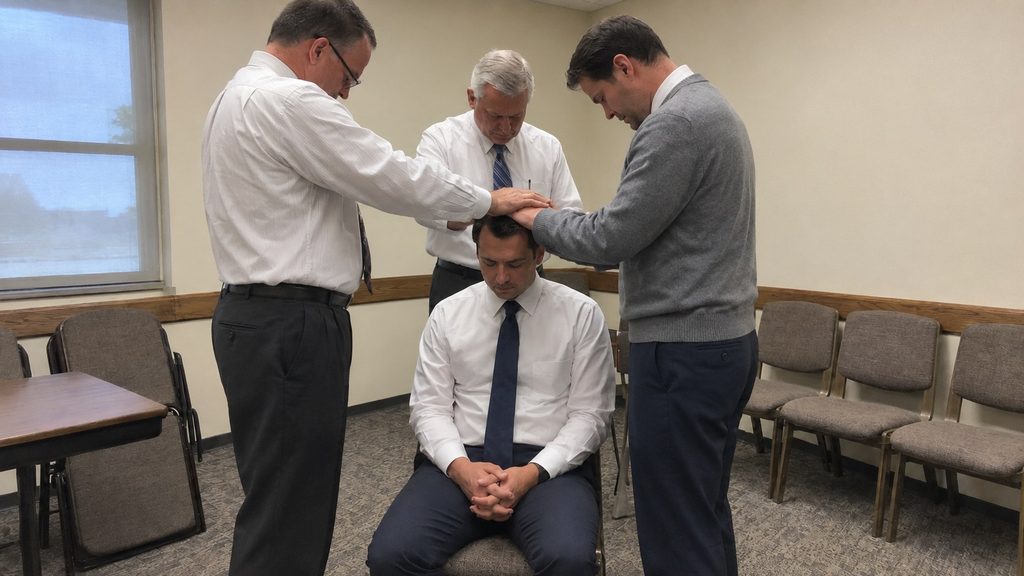
To be set apart for a Church calling means that a member is given authority to act in that particular calling.
Those who are called to most Church positions should be set apart. This generally occurs after the person is sustained and before he or she begins serving.
The setting apart is performed by authorized priesthood holders through the laying on of hands. It also includes a priesthood blessing with counsel and promises as guided by the Spirit.
Is Being Set Apart the Same as Priesthood Ordination?
No.
Being ordained to a priesthood office and being set apart for a Church calling are different things.
A person may be set apart as a teacher, organization leader, clerk, music leader, or in another responsibility without being ordained to a new priesthood office.
Setting apart gives the person authority to function in that specific calling.
How Long Do LDS Church Callings Last?
There is no single standard length for every LDS Church calling.
Some members serve for relatively short periods, while others may remain in a calling for several years.
Church leaders are encouraged, when possible, to allow members enough time to learn their responsibilities, grow in the calling, and build meaningful relationships with the people they serve.
For leadership callings, the General Handbook says that the ideal length varies, but two to five years are often sufficient.
That should not be interpreted as a universal two-to-five-year rule for every calling.
A Primary teacher, organist, ward specialist, organization president, or other member may serve for a different amount of time depending on local needs and circumstances.
Some positions also have more established patterns of service.
The important point is that local Church callings are generally temporary. Receiving a particular calling does not mean holding it indefinitely.
How Are Members Released from Church Callings?
A release ends a member’s responsibility and authority to serve in a particular calling.
In most cases, members are released when Church leaders feel inspired to make a change. Some positions have more established periods of service, and members may also be released because of personal or family circumstances.
Normally, the leader first tells the member privately about the release.
An authorized priesthood leader then announces the release in the same type of setting where the person was sustained. Members may express thanks for the person’s service by raising their hands.
Unlike a sustaining, the leader does not ask whether anyone opposes a release.
Does Being Released Mean You Did Something Wrong?
Usually, no.
Being released is a normal part of Church service.
Callings are temporary responsibilities rather than permanent ranks. A release does not ordinarily mean that the member failed, lost status, or is being punished.
A release is not a demotion.
What Types of LDS Church Callings Are There?
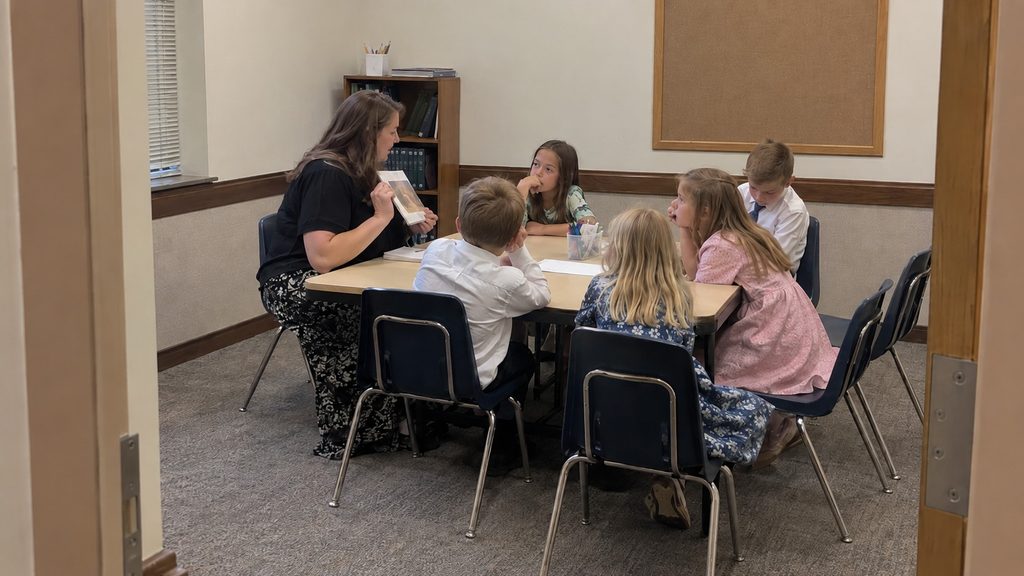
There are many different ward and stake callings, and not every congregation fills every possible position.
Common categories include:
- bishopric and ward leadership;
- Relief Society;
- elders quorum;
- Primary;
- Young Women;
- Sunday School;
- music;
- missionary work;
- temple and family history work;
- clerical and administrative responsibilities;
- activities and service;
- specialist callings based on local needs.
The exact process for recommending, approving, sustaining, and setting apart someone depends on the position.
Can New Members Receive Church Callings?
Yes.
Ward leaders are encouraged to give new members opportunities to serve soon after baptism and confirmation.
Some new members may be ready for a formal calling immediately. Others may prefer temporary assignments that help them prepare to receive callings later.
The goal is to provide opportunities that help new members grow spiritually, develop relationships, and bless others.
Can Nonmembers Receive LDS Church Callings?
Yes, but only in certain positions.
People who are not members of the Church may be called to some responsibilities, such as organist, music director, or helping plan activities.
However, the General Handbook says nonmembers should not be called as teachers, quorum or organization presidency members, or Primary music leaders.
Can Someone Have More Than One Church Calling?
Usually, a member is called to serve in one calling at a time, in addition to serving as a ministering brother or sister.
Exceptions can occur, particularly when local circumstances require them, but the Handbook says such exceptions should be rare and prayerfully considered.
Not every possible position needs to be filled.
Frequently Asked Questions
Does Every LDS Member Have a Calling?
No. Although callings are an important part of Latter-day Saint congregational life, not every member necessarily has a formal calling at every moment.
Local needs, personal circumstances, and the number of available members can all affect when someone receives a calling.
Can You Request a Specific Calling?
A member can talk with leaders about abilities, experience, interests, or ways he or she would like to help, but members generally do not choose or apply for particular callings.
Church teachings discourage aspiring to specific positions.
Who Can Extend a Church Calling?
It depends on the calling.
Different positions require different recommendations, approvals, and authorized leaders.
A bishop or one of his counselors may extend many ward callings, while other responsibilities involve the stake president or other authorized leaders.
The General Handbook’s Chart of Callings identifies who may recommend, approve, sustain, extend, and set apart someone for each listed position.
Does a Spouse Have to Approve a Church Calling?
Leaders are instructed to make sure a spouse is aware of and supportive of the calling. That is not described in the Handbook as a formal joint vote or veto.
When a calling is extended to a married member, the leader also invites the spouse to be present.
This is particularly important when a calling may require significant time or affect family responsibilities.
Can Teenagers Receive Church Callings?
Yes.
Young men and young women can serve in a variety of Church responsibilities.
Before extending a calling to a young man or young woman, however, leaders are instructed to obtain approval from a parent or guardian.
Do You Have to Be Set Apart Before You Start Serving?
For most Church positions, the member should be sustained and set apart before beginning to serve.
In rare circumstances, a member may need to begin serving before being sustained. When that happens, the person is presented for sustaining or ratifying as soon as reasonably possible, according to the procedure for that calling.
Some responsibilities are handled as assignments rather than formal callings and therefore are not sustained or set apart.
The Bottom Line
An LDS Church calling is a temporary invitation to serve in a specific Church responsibility.
The typical process is straightforward: leaders prayerfully determine whom to call, an authorized leader extends the invitation privately, the member is usually sustained and set apart, and the person serves until being released.
At the same time, personal circumstances matter. Health, employment, marriage, family responsibilities, worthiness, and willingness to serve are all part of the official process.
For current policies and details about specific callings, consult the Church’s General Handbook.
Official Sources
General Handbook — Chapter 30: Callings in the Church
General Handbook: Serving in The Church of Jesus Christ of Latter-day Saints
Official Church Callings and Training Resources
Protecting Children and Youth Training
Last reviewed: September 2026.