
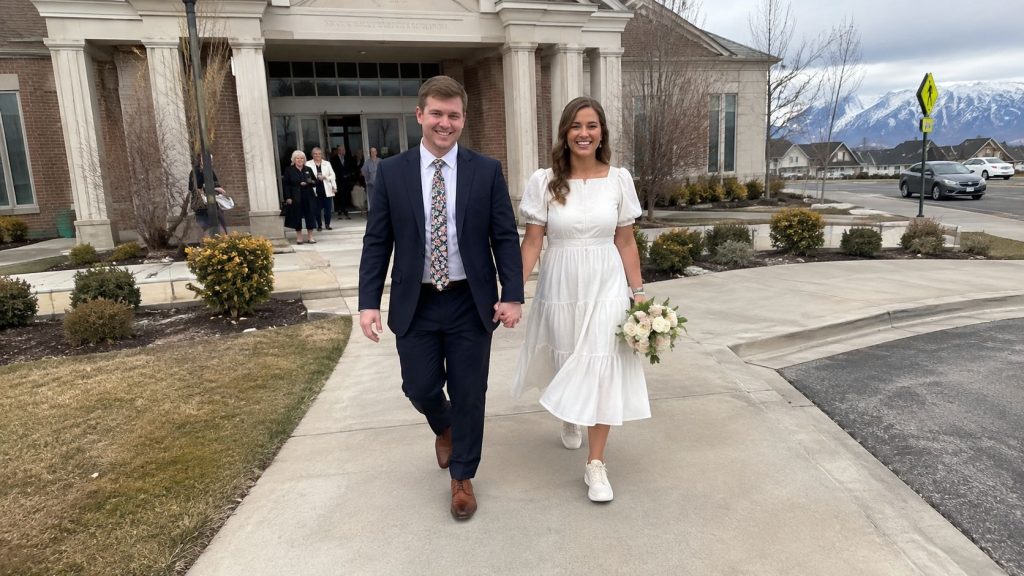
Yes. A Latter-day Saint can marry a non-Latter-day Saint in a legal civil marriage. The Church does not prohibit such marriages.
But a civil marriage and a temple sealing are not the same thing. A couple cannot be sealed in a Latter-day Saint temple while one spouse remains a nonmember.
That distinction is the key: the Church allows civil marriage to a nonmember while continuing to encourage members to prepare for temple marriage.
A note on terminology: This article uses the word Mormon in the title and some headings because “Can Mormons marry non-Mormons?” is a common way people search for this question online. The Church’s preferred terms for its members are Latter-day Saints or members of The Church of Jesus Christ of Latter-day Saints. For that reason, the article primarily uses those terms below.
Policy information in this article was reviewed against the current General Handbook in September 2026.
Yes, Mormons Can Marry Non-Mormons
The Church of Jesus Christ of Latter-day Saints does not require a member to marry another Church member in order to enter a valid civil marriage.
The current General Handbook specifically recognizes civil marriages in several circumstances, including when “a couple is not planning to be married in a temple.” It also states that Church leaders encourage members to qualify for temple marriage and sealing.
Civil marriage laws vary by country and jurisdiction. In some places, couples must complete a civil marriage separately from any religious ceremony, so Church policy distinguishes the legal marriage from the temple sealing ordinance.
So two ideas need to be kept separate.
A Latter-day Saint may marry a nonmember civilly.
At the same time, temple marriage remains the religious ideal encouraged by the Church.
That means the claim “Mormons are not allowed to marry non-Mormons” is inaccurate. But it would also be inaccurate to say that Church teaching makes no distinction between a civil interfaith marriage and a temple sealing.
In Latter-day Saint belief, a civil marriage is valid during mortal life. A temple sealing is a sacred ordinance intended to unite husband and wife for time and all eternity.
Civil Marriage vs. Temple Sealing: Quick Reference
| Question | Civil Marriage With a Nonmember | Temple Sealing |
|---|---|---|
| Is it permitted? | Yes | Not while one spouse remains a nonmember |
| Must both spouses be Church members? | No | Yes |
| Does the nonmember have to convert? | No | Both spouses must meet temple requirements |
| Can nonmembers attend? | Yes | Temple attendance is restricted by recommend requirements |
| Can a Church leader officiate? | Sometimes, if Church policy and local law allow it | Performed by an authorized temple sealer |
| Can it take place in an LDS meetinghouse? | Potentially, yes | No — temple only |
| Could the couple be sealed later? | Potentially, if circumstances change | — |
| Meaning in LDS belief | Marriage for mortal life | Marriage for time and eternity |
A couple can therefore be legally married and recognized as married by the Church without being sealed in a temple.
The sealing is a separate ordinance with its own membership, worthiness and temple requirements.
Can a Mormon Marry a Non-Mormon in an LDS Church?
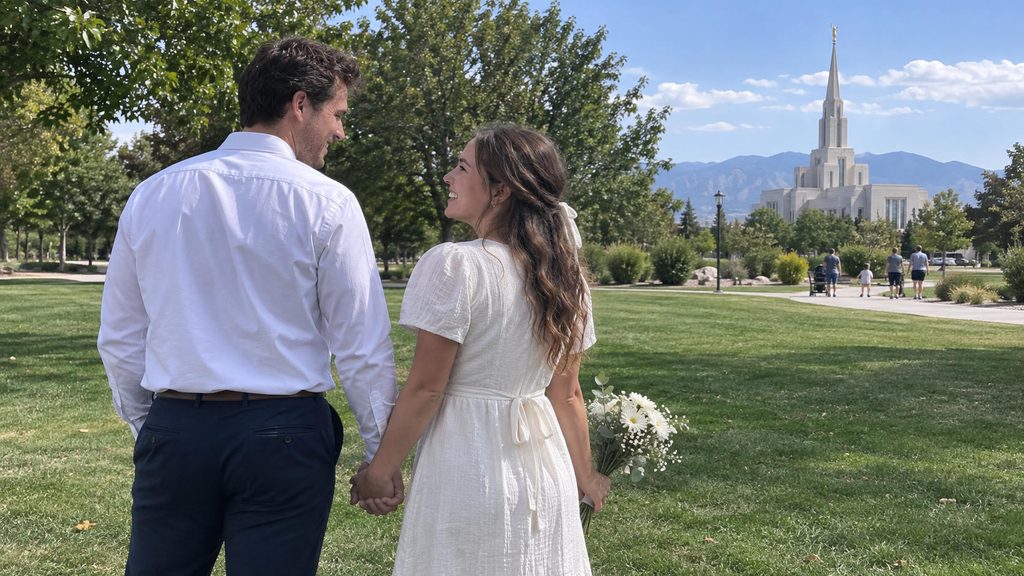
Yes, in some circumstances.
But the word “church” causes confusion because a Latter-day Saint meetinghouse and a temple are very different places.
Can a Civil Wedding Take Place in an LDS Meetinghouse?
Yes.
Current Church policy allows wedding ceremonies to be held in Church buildings when the applicable requirements are followed and the ceremony does not interfere with regular Church functions.
The General Handbook says weddings held in Church buildings should be simple and dignified. A marriage may take place in a chapel, cultural hall or another appropriate room.
Wedding receptions are treated separately. For example, receptions generally are not held in the chapel itself unless it is a multipurpose area.
So if someone asks whether a Mormon and a non-Mormon can marry “in a Mormon church,” the answer can be yes if they mean a civil ceremony in a Latter-day Saint meetinghouse.
That is not a temple sealing.
Can an LDS Bishop Perform the Wedding?
Potentially, yes.
Under current Church policy, certain serving Church officers — including bishops, branch presidents, stake presidents, district presidents and mission presidents — may perform civil marriages when local law permits.
There are important conditions. The bride or groom must be a Church member or have a baptismal date, one person’s membership record must be or become part of the unit over which the officer presides, and the officer must be legally authorized to perform marriages in that jurisdiction.
So an LDS bishop cannot automatically perform the wedding of any interfaith couple simply because one spouse is a Latter-day Saint.
Both Church policy and local law must be satisfied.
Can a Mormon Marry a Non-Mormon in an LDS Temple?
No.
A nonmember cannot participate as a spouse in a temple sealing.
Members must receive the necessary temple ordinances and meet temple eligibility requirements before they can be sealed to a spouse. The current Handbook also states that members must be endowed before they can be sealed.
A civil interfaith marriage may therefore be possible. A temple sealing is not possible while one spouse remains a nonmember.
What If the Non-Mormon Spouse Converts Later?
An interfaith marriage does not necessarily mean a temple sealing can never happen.
Suppose a Latter-day Saint marries someone outside the Church. Later, the nonmember spouse independently decides to join The Church of Jesus Christ of Latter-day Saints.
The couple may eventually become eligible to be sealed.
But baptism does not mean they can immediately go to the temple for a sealing.
Current Church policy says a man and woman who were married civilly may be sealed when both have been Church members for at least one year and both are prepared and worthy. Members must also receive their own endowment before being sealed to a spouse.
Do They Have to Wait One Year Because They Had a Civil Wedding?
No.
This is one of the most important policy changes to understand because older information online may still give a different answer.
On May 6, 2019, the First Presidency announced that a civil marriage would no longer automatically require a couple to wait one year before being sealed in the temple. Eligible couples could instead be sealed as soon as circumstances permitted.
However, separate membership and temple requirements still apply when one spouse is a new convert.
The easiest way to remember the distinction is:
One year because you had a civil wedding? No.
A one-year membership requirement because one spouse is a new Church member? Yes.
Those are two different rules.
Can a Mormon Marry a Catholic, Protestant, or Atheist?
The basic civil-marriage policy is the same whether the nonmember spouse belongs to another faith or has no religious affiliation.
Can a Mormon Marry a Catholic?
Yes. A Latter-day Saint may marry a Catholic civilly. The Catholic spouse does not need to convert, although a temple sealing would require both spouses to meet Church temple requirements.
Can a Mormon Marry Another Christian?
Yes. Latter-day Saints consider themselves Christians, so this usually means a Christian from another denomination. A civil marriage is permitted; temple sealing has separate requirements.
Can a Mormon Marry an Atheist or Agnostic?
Yes. Church policy does not require a civil spouse to belong to a religion. The same temple-sealing requirements still apply.
How Common Are LDS Interfaith Marriages?
They are allowed, but they are not especially common.
The Pew Research Center’s 2023–24 Religious Landscape Study, published in 2025, found that 87% of married Latter-day Saints in the United States had a spouse of the same religion.
That was the highest same-faith marriage rate among the religious groups Pew was able to analyze. By comparison, 81% of married Protestants had Protestant spouses, while about three-quarters of married Catholics had Catholic spouses.
So allowed does not mean common.
Most married Latter-day Saints in the United States are married to another Latter-day Saint.
There is an important limitation to those numbers. Pew did not have a large enough sample of religiously intermarried Latter-day Saints to analyze that smaller group in detail.
The 87% figure therefore tells us how common same-faith marriage is. It does not tell us why particular Latter-day Saints marry outside their faith or how those marriages work.
6 Practical Realities for LDS–Non-LDS Couples
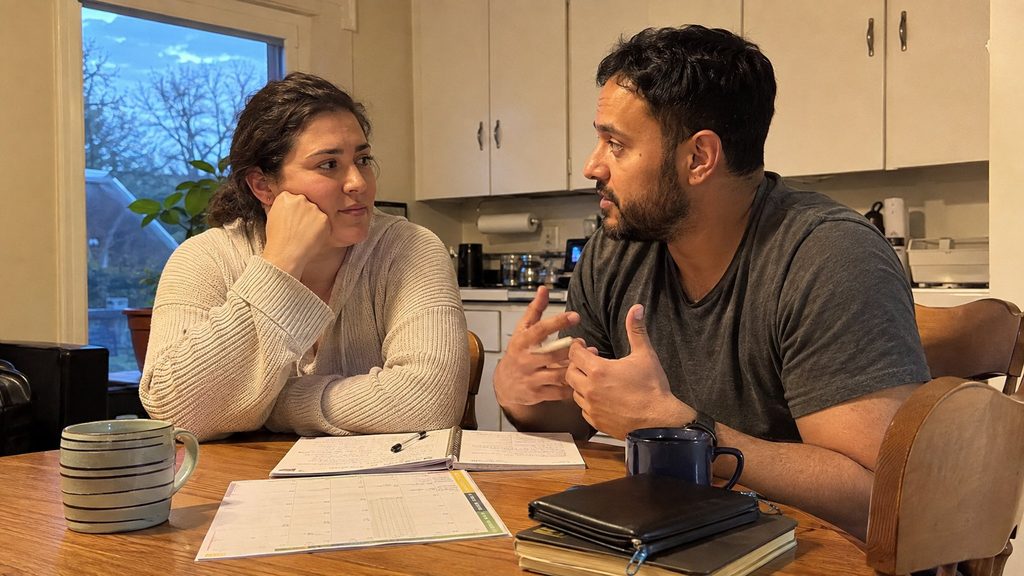
Knowing that an interfaith marriage is allowed answers the rule.
It does not answer what the marriage may actually look like.
1. Children, Baptism and Church Participation
An interfaith couple should discuss religion before their children reach important religious milestones.
Will the children attend Primary? Will they participate in youth programs? Will they be baptized?
Latter-day Saint children are normally baptized at age eight when the applicable requirements are met.
For minors, Church policy requires the appropriate permission from parents or legal guardians who have the legal right to give or withhold it. Parents or guardians should also understand what the child will be taught and be willing to support the child in making and keeping the baptismal covenant.
Temple questions may matter later as well.
Children born after their mother has been sealed to a husband are considered born in the covenant. Children who are not born in the covenant may later be sealed to their birth or adoptive parents if the necessary temple requirements are met.
These are easier conversations to have years in advance than the week before a proposed baptism.
2. Sundays and Church Callings
Active Latter-day Saint life can involve considerably more than attending a Sunday worship service.
If the nonmember spouse plans to attend occasionally, our guide to what to expect at a Mormon church service explains what Sunday worship, classes and visitor participation actually look like.
A member may have Church meetings, a calling, youth activities, ministering responsibilities and other commitments.
The practical question is therefore not simply:
“Are you okay with me going to church?”
It is whether both spouses understand how religious participation may affect family time and responsibilities.
3. Tithing and Household Finances
For a believing Latter-day Saint, paying tithing can be an important religious commitment.
For a nonmember spouse, that same money may look like part of the family’s shared income.
That creates a concrete question:
What happens when one spouse views tithing as a religious obligation and the other views the money as part of the household budget?
The answer will differ from couple to couple, but it is much easier to discuss before it becomes a recurring disagreement.
4. Word of Wisdom Differences at Home
Coffee, tea and alcohol can appear to be minor lifestyle differences while dating.
For a closer look at what the Church currently teaches about coffee, tea, caffeine, alcohol and related questions, see our guide to the LDS Word of Wisdom.
In a shared home, they become everyday decisions.
Will alcohol be kept in the house? Will one spouse drink coffee while the other abstains? What will the couple teach their children about their different choices?
The issue is not simply who is “right.” It is whether both people understand what the other person’s religious standards look like in ordinary daily life.
5. Temple and Family Exclusions
The temple can create one of the most emotionally difficult differences in a Latter-day Saint interfaith marriage.
The Latter-day Saint spouse may hold a temple recommend and participate in temple ordinances. The nonmember spouse cannot participate in those ordinances.
That difference may become especially visible when a child, sibling or other close relative is sealed and the nonmember spouse cannot attend the sealing ceremony.
For couples considering an interfaith marriage, the temple should therefore not be treated only as an abstract theological difference.
At certain moments, it can become a very personal family reality.
6. Is One Spouse Secretly Expecting Conversion?
This may be the most important question in the entire discussion.
There is a significant difference between saying:
“I respect your beliefs.”
and silently meaning:
“I expect your beliefs to change someday.”
A Latter-day Saint should be honest about how important a future temple sealing is personally.
The nonmember should be equally honest about whether joining the Church is something he or she genuinely wants, might consider or does not expect ever to do.
One question can clarify a great deal:
Would the Latter-day Saint spouse still choose this marriage if the other person never joined the Church?
That question is harder than “Can Mormons marry non-Mormons?”
For a real couple, it may also be more important.
Frequently Asked Questions
Is It a Sin for a Mormon to Marry a Non-Mormon?
Church policy does not prohibit marrying a nonmember. A civil marriage to a nonmember is not identified in current Church policy as a reason for loss of membership. At the same time, Church leaders continue to encourage members to prepare for temple marriage.
Does Marrying a Non-Mormon Cause Someone to Lose Church Membership?
No.
A Latter-day Saint does not lose Church membership simply because he or she enters a civil marriage with a nonmember.
Other conduct could raise separate Church membership questions, but the spouse’s religious affiliation by itself does not make the civil marriage prohibited.
Does Marrying a Nonmember Automatically Cost Someone a Temple Recommend?
No, not automatically.
Marrying a nonmember is not itself a separate temple-recommend question.
Temple recommend eligibility is determined through the Church’s standard recommend requirements. The Handbook instructs leaders conducting recommend interviews not to add or remove requirements.
Can a Non-Mormon Attend a Mormon Wedding?
Yes, if it is a civil wedding.
A nonmember may attend a civil marriage involving a Latter-day Saint, including an eligible ceremony held in a Church meetinghouse.
A temple sealing is different. Attendance inside the temple is governed by temple recommend requirements, so a nonmember cannot attend the sealing ceremony.
Can an LDS–Non-LDS Couple Be Sealed Later?
Potentially, yes.
If the nonmember spouse later chooses to join the Church and both spouses meet the current membership, endowment, worthiness and temple requirements, a civilly married couple may later be sealed.
Conversion is not required simply for the couple to remain civilly married.
So, Can Mormons Marry Non-Mormons?
Yes. A Latter-day Saint can marry a nonmember in a legal civil marriage.
What the couple cannot do while one spouse remains a nonmember is receive a temple sealing together.
That is the central distinction: interfaith civil marriage is allowed, while temple sealing requires both spouses to meet the Church’s temple requirements.
Sources
- The Church of Jesus Christ of Latter-day Saints — General Handbook, Section 38: Church Policies and Guidelines
Civil marriage policies, who may perform a civil marriage, weddings in Church buildings, and sealing after civil marriage.
General Handbook — Section 38 - The Church of Jesus Christ of Latter-day Saints — General Handbook, Section 27: Temple Ordinances for the Living
Requirements for the sealing of a husband and wife, including endowment and temple eligibility.
General Handbook — Section 27 - Church Newsroom — “Couples Married Civilly Now Authorized for Immediate Temple Marriage,” May 6, 2019
First Presidency announcement ending the general one-year waiting period between a civil marriage and temple sealing.
2019 First Presidency policy announcement - Pew Research Center — “Religious Intermarriage,” 2023–24 Religious Landscape Study, published February 26, 2025
Source for the finding that 87% of married Latter-day Saints surveyed in the United States had a spouse of the same religion.
Pew Research Center — Religious Intermarriage - Church Newsroom — Style Guide: The Name of the Church
Explains the Church’s preferred use of “Latter-day Saints” and “members of The Church of Jesus Christ of Latter-day Saints” rather than “Mormons” as the general name for members.
Church Newsroom Style Guide