
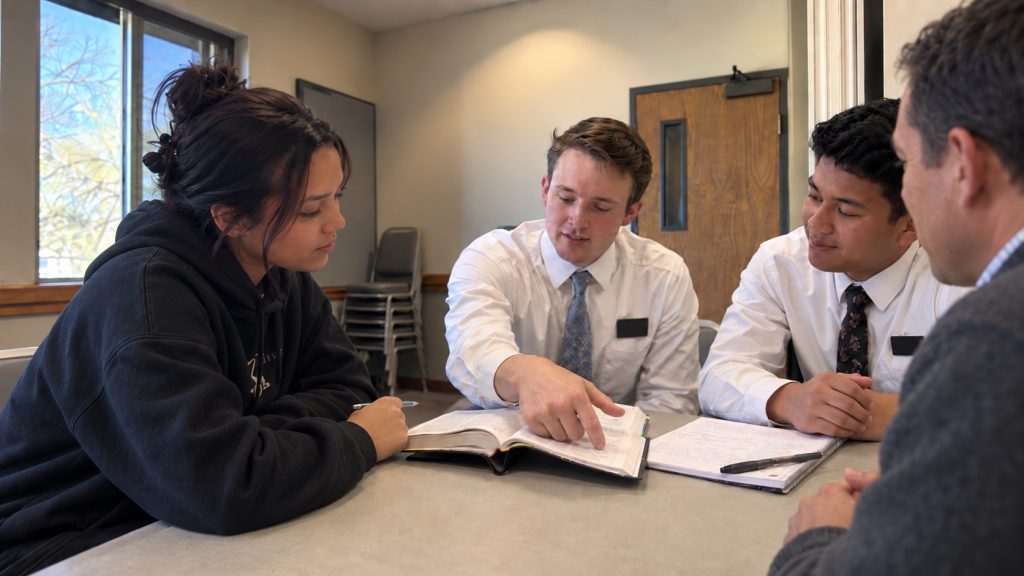
To be baptized as a convert, you normally complete the missionary lessons, attend several sacrament meetings, meet local Church leaders, begin living key Church standards, and complete a baptismal interview.
Some circumstances add other requirements. Being a minor, being married, living with a partner outside marriage, or having certain criminal circumstances can affect whether baptism can proceed as scheduled.
Below is a practical checklist of what is normally required, followed by the situations that can delay baptism or require additional approval. The current process is outlined in the Church’s General Handbook and Preach My Gospel.
LDS Baptism Requirements at a Glance
| Requirement | What It Means |
|---|---|
| Age | Normally age 8 or older |
| Missionary lessons | Converts receive all the missionary lessons |
| Church attendance | Attend several sacrament meetings; no fixed number is stated |
| Meet local leaders | Meet the bishop, elders quorum president, and Relief Society president |
| Gospel standards | Begin living the Word of Wisdom, law of chastity, Sabbath observance, and tithing commitments |
| Baptismal interview | Required for converts |
| Parent or guardian permission | Required in applicable cases for minors |
| Spouse consent | Required if married |
| Previous Christian baptism | LDS baptism is still required to join the Church |
These requirements are part of a larger process of conversion rather than boxes to check mechanically. The purpose is to be prepared to make the baptismal covenant sincerely and begin living it.
What Are the Basic Requirements for LDS Baptism?
Behind the practical requirements is a spiritual standard found in Doctrine and Covenants 20:37. A person preparing for baptism should have faith in Jesus Christ, repent, sincerely desire baptism, and be willing to follow Christ and keep His commandments.
Faith in Jesus Christ
Baptism is first a commitment to follow Jesus Christ.
A prospective convert does not need to know the answer to every doctrinal question or have years of religious experience. But the baptismal interview does ask directly about belief in God the Father and in Jesus Christ as the Savior and Redeemer of the world.
Repentance
Repentance is also part of preparation.
That does not mean reaching a state of perfection before baptism. It means turning toward Christ, sincerely leaving behind behavior that conflicts with the commitments being made, and being willing to continue changing.
A Sincere Desire to Be Baptized
Baptism should be a voluntary decision.
Missionaries can teach, invite, answer questions, and help someone prepare, but the decision itself should come from the person being baptized.
Willingness to Follow Christ and Keep His Commandments
The baptismal covenant is more than agreement with a list of beliefs.
A person promises to take upon himself or herself the name of Christ, serve others, stand as a witness of God, and strive to keep His commandments throughout life.
That is why the baptismal interview focuses not only on belief but also on whether a person is ready to begin living certain gospel standards.
How Old Do You Have to Be to Be Baptized LDS?
The minimum age for baptism is normally 8 years old. The Church does not practice infant baptism.
But the familiar phrase “baptized at 8” does not describe every situation.
Baptism at Age 8
Children who are already members of record generally prepare for baptism around their eighth birthday.
Their process is different from an adult convert’s. A bishop interviews an eight-year-old member-of-record child to make sure the child understands the baptismal covenant and intends to keep it.
This is not treated as a convert baptismal interview.
When Is Someone Considered a Convert for Baptism?
For baptismal interview purposes, the Church treats the following as converts:
- people age 9 and older who have never been baptized and confirmed;
- children age 8 and older whose parents are not Church members;
- children age 8 and older who have a parent who is also being baptized and confirmed.
For these convert baptisms, the mission president holds the priesthood keys and a full-time missionary conducts the baptismal interview. The details are given in General Handbook 31.2.3.2.
Do You Have to Take Missionary Lessons Before Baptism?
Yes. Converts are expected to receive all the missionary lessons before baptism.
The lessons are intended to make sure a person understands both the basic beliefs of the Church and the commitments that come with membership.
They cover subjects such as Jesus Christ and His gospel, the Restoration, God’s plan for His children, baptism and confirmation, and the commandments and habits involved in continuing as a disciple after baptism.
This is preparation, not a school exam.
The goal is not simply to say that every lesson has been “completed.” A person should understand what has been taught and be prepared to make the baptismal covenant and live the commitments connected with it.
If you want to see what the lessons actually cover, read our guide What Do Mormon Missionaries Teach?
The Church lists receiving all the missionary lessons among the qualifications for baptism in Preach My Gospel, Chapter 12.
How Many Times Do You Have to Attend Church Before Baptism?
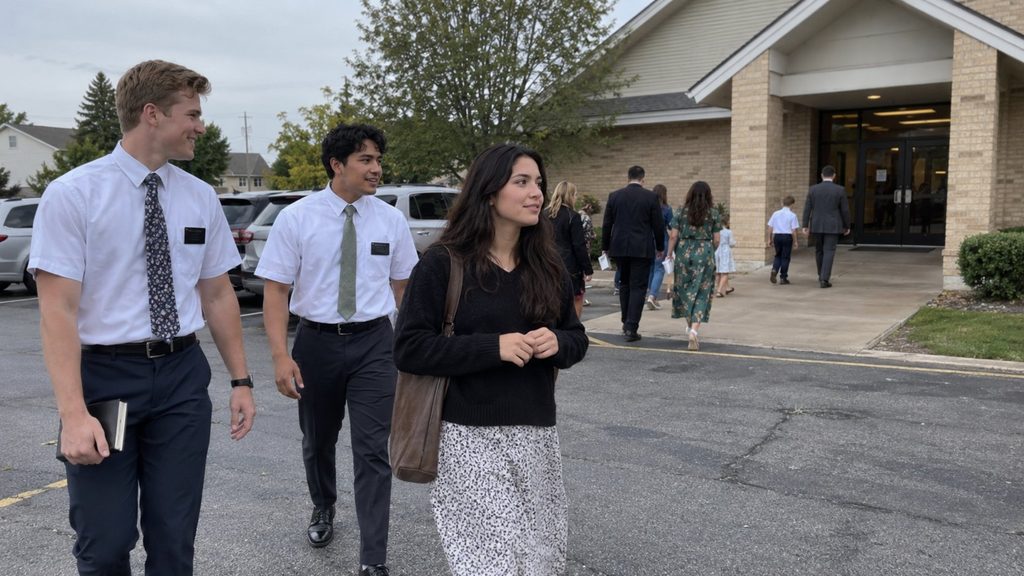
There is no official requirement to attend exactly three Sundays, four Sundays, or any other fixed number of weeks before baptism.
Current Church guidance says prospective converts should attend several sacrament meetings before baptism. It does not turn that phrase into a Church-wide numerical rule. The wording appears in Preach My Gospel, Chapter 12.
That distinction matters because informal numbers are sometimes repeated as though they were universal LDS policy.
The purpose of attending is more important than reaching an arbitrary count. Someone preparing for baptism should have begun experiencing normal Church worship, meeting members of the local congregation, and understanding what weekly participation will look like after baptism.
What Standards Do You Need to Live Before Baptism?
The baptismal interview asks whether a prospective convert understands and is willing to obey several key gospel standards: the law of chastity, tithing, the Word of Wisdom, and keeping the Sabbath day holy.
Word of Wisdom
Baptismal candidates are expected to obey the Word of Wisdom.
In practical terms, Church teaching includes abstaining from coffee, tea, alcoholic drinks, tobacco, and illegal or otherwise harmful drugs or substances.
A person does not need a lifelong record of flawless observance. But baptismal preparation does require actually beginning to live the standard rather than planning to change at some undefined point after baptism.
The Word of Wisdom commitment is covered in Preach My Gospel, Lesson 4.
Law of Chastity
The baptismal interview defines the law of chastity as prohibiting sexual relations outside a legal marriage between a man and a woman.
A candidate is asked whether he or she understands this standard and is willing to obey it.
This becomes especially important when a couple is currently living together outside marriage, because Church policy requires a practical change before baptism.
Tithing
A prospective convert is taught the law of tithing and asked whether he or she understands it and is willing to obey it.
For someone who is not yet a Church member, this is primarily a commitment about how he or she intends to live going forward—not a requirement to produce a history of past tithing payments.
For questions such as whether Latter-day Saints calculate tithing on gross or net income, see our separate guide LDS Tithing: Gross or Net?
Keeping the Sabbath Day Holy
The interview also asks about keeping the Sabbath day holy.
Prospective members are taught to make Sunday a day centered on worship, spiritual renewal, service, and Christ, including regular participation in sacrament meeting.
For practical questions about work, shopping, restaurants, sports, and other Sunday activities, see What Can Mormons Do on Sunday?
What Happens in an LDS Baptismal Interview?
Every convert completes a baptismal interview before baptism.
The questions are not meant to be a surprise. Church missionary materials publish them and instruct missionaries to help candidates understand the interview beforehand. You can see the current preparation instructions in Preach My Gospel, Chapter 12.
For convert baptisms, the interview is conducted by an authorized missionary leader—normally a district leader or zone leader. In practice, this is often someone other than the missionaries who have been teaching you. If those leaders are unavailable, the mission president can assign another authorized elder.
The interview itself should be private, respectful, and spiritually focused. Its purpose is to understand the candidate’s belief, repentance, and readiness to make the baptismal covenant—not to conduct an interrogation.
Is Meeting the Bishop the Same as the Baptismal Interview?
No.
A prospective convert should meet the bishop before baptism, but this meeting is separate from the baptismal interview.
The General Handbook explicitly says the bishop does not interview the convert for baptism and does not determine the person’s worthiness for baptism during that meeting.
Its purpose is to begin building a relationship with the person and help connect the new convert with the local congregation.
Current Church preparation also includes meeting the elders quorum president and Relief Society president.
What Questions Are Asked in an LDS Baptismal Interview?
The baptismal interview questions are not secret. The Church publishes them, and missionaries are instructed to help candidates understand the interview before it happens.
The current interview questions appear in the General Handbook and in Preach My Gospel.
The current interview covers seven main areas.
Belief in God and Jesus Christ
The interviewer asks whether you believe in God as the Eternal Father and in Jesus Christ as the Son of God, Savior, and Redeemer of the world.
What this means in practice: Baptism assumes a basic personal faith in Jesus Christ rather than simply an interest in LDS culture or community.
The Restoration, Joseph Smith, and a Living Prophet
You are asked about belief in the Restoration of the gospel through Joseph Smith and in the current President of the Church as a prophet of God.
What this means in practice: You should understand the Church’s central claim about the Restoration and be able to answer honestly about your own belief.
Repentance
The interviewer asks what repentance means to you and whether you feel you have repented of past sins.
What this means in practice: The question is about sincere change, not whether your past has been flawless.
Chastity, Tithing, the Word of Wisdom, and Sabbath Observance
You are asked whether you understand these standards and are willing to obey them.
What this means in practice: Baptismal preparation includes beginning to live the commitments you are about to make.
Serious Crimes, Probation, or Parole
The interviewer asks about serious crimes and current probation or parole.
What this means in practice: A “yes” does not automatically mean permanent disqualification. It may move the case into an additional Church review process.
Abortion
The current interview separately asks about participation in an abortion.
What this means in practice: Again, a “yes” is not an automatic permanent ban on baptism. Additional review may be required.
Readiness to Make the Baptismal Covenant
Finally, you are asked whether you are ready to covenant to take upon yourself the name of Christ, serve others, stand as a witness of God, keep His commandments, and strive to remain faithful throughout your life.
The underlying question is simple:
Are you ready to begin living as a disciple of Jesus Christ?
Can I Be Baptized If…?
This is where LDS baptism requirements become more dependent on individual circumstances.
Can I Be Baptized If I Still Drink Coffee?
Generally, no—not while you are knowingly continuing to drink coffee and have no intention of stopping.
The Word of Wisdom is one of the standards addressed in the baptismal interview, and baptismal candidates are expected to begin living it before baptism.
That does not mean there is an official “30 days without coffee” rule.
Someone who has recently stopped drinking coffee does not need to satisfy an invented universal countdown. The issue is whether the person is now actually living the standard and intends to continue doing so.
Can I Be Baptized If I Recently Quit Smoking or Drinking?
Often yes, if you are now living the Word of Wisdom and are prepared to continue doing so.
There is no universal Church-wide rule saying that everyone who quits smoking or alcohol must then wait a fixed 30, 60, or 90 days before baptism.
What matters is genuine repentance, readiness, and actual obedience.
Can I Be Baptized If I Haven’t Started Paying Tithing Yet?
Yes, a convert does not need a history of tithing payments before baptism.
The baptismal interview asks whether the candidate understands the law of tithing and is willing to obey it.
That is different from saying, “I understand the teaching, but I have already decided that I will not follow it.”
The question is about a genuine commitment going forward.
Can I Be Baptized If I Live With My Boyfriend or Girlfriend?
Not while you are still living together as an unmarried couple.
Current Church policy says a couple living together but not married must begin living the law of chastity before either person can be baptized.
That means no longer living together as a couple. In the case of a man and a woman, the other option is to marry.
Simply promising that the relationship will become chaste someday is not enough while the same unmarried cohabiting arrangement continues.
The relevant policies are in General Handbook 38.2.8.
Can I Be Baptized If I’m Married to Someone Who Isn’t Mormon?
Yes. Your spouse does not have to join the Church with you.
Interfaith marriage by itself does not disqualify someone from baptism.
However, there is an additional requirement for married converts: the spouse must consent to the baptism.
Can I Be Baptized If My Spouse Doesn’t Agree?
No. A married person must have the consent of his or her spouse before being baptized.
That can be difficult when one spouse believes strongly and the other is uncomfortable with the decision. But under current policy, missionaries cannot simply ignore the lack of required consent and proceed.
The requirement is included in the Church’s baptism and confirmation policies.
Can I Be Baptized If I’m Under 18?
It depends on your age, local law, and parental or legal guardian permission.
Church policy defines a minor according to local law.
A minor may be baptized when the parents or legal guardians who have a legal basis to oppose the baptism give permission and when the interviewer is satisfied that the young person understands the baptismal covenant and intends to keep it.
The exact documentation required can depend on local law and circumstances.
Can I Be Baptized If I’ve Committed a Serious Crime?
It depends. A serious crime does not automatically create a permanent ban on LDS baptism, but it can change the approval process.
Some circumstances require an additional interview and authorization from the mission president.
Certain more serious circumstances require approval at a higher level.
The ordinary missionary interviewer should not promise that baptism will be approved before the required review has taken place.
The current approval rules are detailed in General Handbook 38.2.8.
Can I Be Baptized While on Probation or Parole?
It depends on the offense and the type of legal supervision.
People convicted of certain serious offenses may need to complete probation or parole before baptism.
Some cases involving serious offenses or sexual misconduct require First Presidency consideration.
People serving a term of imprisonment must complete that imprisonment before baptism can proceed.
Because the requirements differ according to the circumstances, this is an area where missionaries should follow the Church’s review process rather than guess at the answer.
Can I Be Baptized If I’ve Participated in an Abortion?
It depends, but participation in an abortion is not an automatic permanent ban on baptism.
Current Church policy requires additional review before baptism can be authorized in these circumstances.
The purpose of the additional process is to determine repentance and readiness rather than to assume automatically that the person can never be baptized.
See General Handbook 38.2.8 for the current policy.
Can I Be Baptized If I Was Baptized in Another Christian Church?
Yes—but you would still need to receive an LDS baptism to become a member of The Church of Jesus Christ of Latter-day Saints.
Latter-day Saints believe that baptism must be performed by proper priesthood authority.
For that reason, a previous Catholic, Baptist, Methodist, Orthodox, evangelical, or other Christian baptism does not replace the baptism required for membership in the Church.
This is one reason the LDS convert process applies even to people who have been committed Christians for many years.
What If I Used to Be a Member of the LDS Church?
This is a different process.
People whose Church membership was withdrawn or who formally resigned their membership may be readmitted through baptism and confirmation, but the Church does not classify them as converts.
Missionaries do not conduct their readmission baptismal interview.
Instead, readmission is handled through the appropriate Church leaders under a separate process. Depending on the circumstances surrounding the previous loss or resignation of membership, additional interviews or approval may be required.
A missionary may still participate in teaching or perform the baptism if appropriately authorized, but the person is not simply placed back into the normal convert-baptism process.
If you are a former member seeking to return, an appropriate local Church leader is the better starting point than the ordinary convert baptism checklist.
The separate readmission process is covered in the General Handbook.
How Long Does It Take to Get Baptized Mormon?
There is no universal Church-wide waiting period before LDS baptism.
The Church does not publish a rule saying every convert must wait 30 days, six weeks, or some other fixed amount of time.
Instead, timing depends on whether the person has:
- received the missionary lessons;
- attended several sacrament meetings;
- met the appropriate local leaders;
- begun living the required commitments;
- become ready for the baptismal interview;
- completed any additional review that applies to his or her circumstances.
For many converts, preparation is measured in weeks rather than by a long formal waiting period. But circumstances vary enough that presenting a universal “average” as though it were Church policy would be misleading.
A baptism date is a goal, not a reason to proceed before someone is ready.
What Can Delay an LDS Baptism?
Several situations can postpone baptism even after someone has begun meeting with missionaries.
| Situation | What Usually Happens |
|---|---|
| Not yet living required Church standards | Baptism is postponed until the commitment is being lived |
| Cohabiting unmarried | Stop living together as a couple, or marry if a man and a woman; baptism waits until the law of chastity is being lived |
| Missing required consent | Baptism waits until the required consent is obtained |
| Serious crime | Additional interview and authorization may be required |
| Abortion | Additional review and authorization may be required |
| Current imprisonment | Baptism waits until imprisonment is completed |
| Certain probation or parole cases | Supervision may need to be completed before baptism |
| Certain serious sexual or criminal offenses | First Presidency approval may be required |
These situations do not all follow the same approval process. Missionaries therefore should not promise that a baptism will be approved—or promise a specific baptism date—before any required review is complete.
For the current approval rules, see General Handbook 38.2.8.
What Happens After You’re Approved for Baptism?
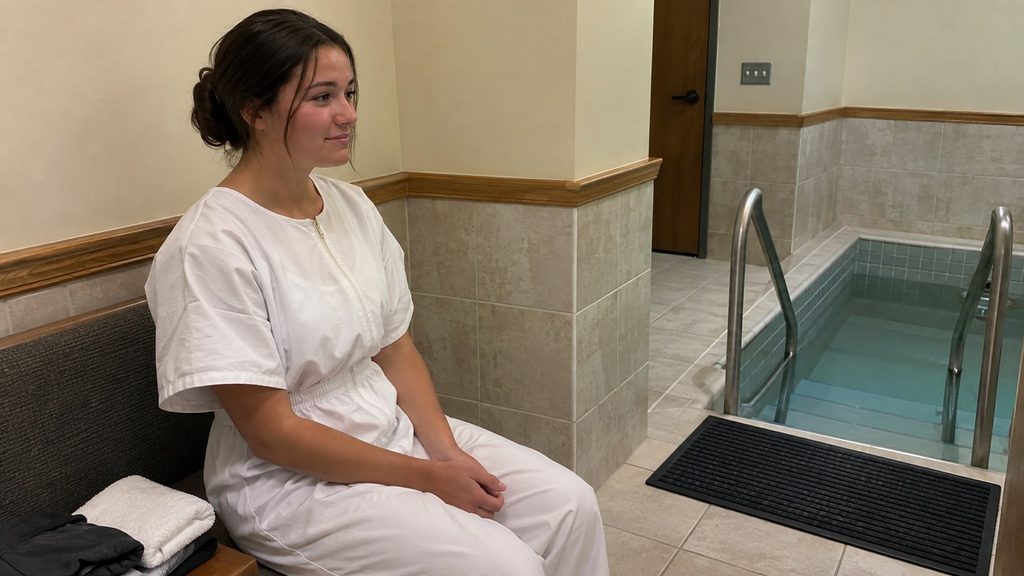
Once the preparation and interview are complete, the baptismal service can be scheduled.
The person being baptized normally wears white baptismal clothing, and the ordinance is performed by immersion by an appropriately authorized priesthood holder.
Confirmation follows as part of becoming a member; timing follows current Church procedure and local scheduling.
Under current policy, converts may be confirmed at the baptismal service or in sacrament meeting in the ward where they live as soon as possible after baptism. The current ordinance instructions are in General Handbook 18.7–18.8.
For a complete walkthrough of the service—including what happens step by step, how long it lasts, what guests wear, photographs, gifts, and what a first-time visitor should expect—see What to Expect at a Mormon Baptism.
LDS Baptism Requirements FAQ
Does It Cost Money to Be Baptized LDS?
No.
There is no baptism fee or membership fee required to join The Church of Jesus Christ of Latter-day Saints.
Tithing is a religious commitment taught to members, not a price charged for receiving baptism.
Can I Choose Who Baptizes Me?
Often, yes, as long as the person is authorized to perform the ordinance and receives the required approval.
An LDS baptism can be performed by someone who holds the required priesthood authority and is approved to perform the ordinance.
So the person who baptizes you does not necessarily have to be one of the missionaries who taught you.
Do Missionaries Have to Baptize Me?
No.
A full-time missionary may perform a convert baptism, but missionaries are not the only people who can do so.
Another appropriately authorized priesthood holder—such as a family member, friend, or local Church member—may be able to perform the ordinance.
Is Confirmation Required After Baptism?
Yes.
In Latter-day Saint practice, baptism and confirmation are connected ordinances.
During confirmation, Melchizedek Priesthood holders lay their hands on the person’s head, confirm him or her a member of The Church of Jesus Christ of Latter-day Saints, and confer the gift of the Holy Ghost.
A convert becomes a member through baptism and confirmation. Under current policy, confirmation may occur at the baptismal service or in sacrament meeting as soon as possible afterward.
Last reviewed: September 2026
“Mormon” and “LDS” remain common search terms used by people looking for information about the Church. The official name is The Church of Jesus Christ of Latter-day Saints.
Official Church Sources
- Preach My Gospel: Chapter 12 — Help People Prepare for Baptism and Confirmation
- Preach My Gospel: Lesson 4 — Becoming Lifelong Disciples of Jesus Christ
- General Handbook: Chapter 18 — Priesthood Ordinances and Blessings
- General Handbook: Chapter 31 — Interviews and Other Meetings with Members
- General Handbook: Chapter 38 — Church Policies and Guidelines
- Missionary Standards for Disciples of Jesus Christ (2026)