

Last reviewed: September 2026 · Based on the current second edition of Preach My Gospel (2023). A note on terminology: This article uses the term Mormon missionaries because it remains a common phrase people use when searching for information online. The Church’s official name is The Church of Jesus Christ of Latter-day Saints, and its missionaries are more accurately called Latter-day Saint missionaries.
Mormon missionaries — more formally, missionaries of The Church of Jesus Christ of Latter-day Saints — currently teach four main lessons. They cover the Restoration of the gospel, God’s plan of salvation, the gospel of Jesus Christ, and what it means to become a lifelong disciple of Jesus Christ.
Older websites may describe five Mormon missionary lessons because they are based on the earlier edition of the Church’s missionary guide. The current Preach My Gospel uses four.
The lessons are also more than explanations of Latter-day Saint beliefs. Missionaries invite people to act on what they are learning— for example, by praying, reading scripture, attending church, meeting again, living particular commandments, and considering baptism.
Official source: Preach My Gospel, Chapter 3 — Study and Teach the Gospel of Jesus Christ
What Do Mormon Missionaries Teach? The Short Answer

The current Preach My Gospel lessons are organized into four main lessons:
| Current Lesson | Core Doctrine & Focus | Examples of Invitations |
|---|---|---|
| 1. The Restoration | God, Jesus Christ, prophets, apostasy, Joseph Smith, First Vision, Book of Mormon | Pray, read the Book of Mormon, attend church |
| 2. The Plan of Salvation | Premortal life, mortality, Christ’s Atonement, death, resurrection, life after death | Pray, read scripture, meet again |
| 3. The Gospel of Jesus Christ | Faith in Christ, repentance, baptism, Holy Ghost, enduring to the end | Act in faith, repent, prepare for baptism |
| 4. Becoming Lifelong Disciples | Baptismal covenant, commandments, worship, service, continued discipleship | Begin living specific commandments as appropriate |
These are examples, not a fixed sequence attached to each lesson. Missionaries may also invite someone to attend church, meet again, read scripture, or consider baptism at different points in the teaching process. They are instructed to adapt both their teaching and their invitations to the individual.
Why Do Some Websites Say There Are Five Mormon Missionary Lessons?
Websites that list five Mormon missionary lessons are usually describing the original 2004 edition of Preach My Gospel. The current second edition, released in 2023, organizes missionary teaching into four lessons. Its fourth lesson, “Becoming Lifelong Disciples of Jesus Christ,” combines material that was previously divided between Lessons 4 and 5.
The Church released the second edition in June 2023; the current manual identifies 2004 as the first edition and 2023 as the second.
The Church’s own summary of the update specifically explains that the new Lesson 4 combines the former fourth and fifth lessons and organizes the material around aspects of the baptismal covenant.
That is why searches for LDS missionary lessons can still produce two apparently different answers.
They are not two different missionary programs currently operating side by side. In most cases, pages listing five lessons are simply describing the previous edition.
For someone meeting with missionaries today, four lessons is the current structure.
Official sources: Preach My Gospel title page — first edition 2004, second edition 2023 · Church Newsroom — What Changed in the Second Edition of Preach My Gospel
Lesson 1: The Message of the Restoration of the Gospel of Jesus Christ
The first lesson begins with several familiar Christian ideas—God, Jesus Christ, scripture, and prophets—but then moves into teachings that are distinctive to the Latter-day Saint faith.
God, Jesus Christ, and Prophets
Missionaries teach that God is Heavenly Father, that He knows and loves His children, and that He has repeatedly reached out to humanity through prophets.
They teach about the ministry, death, and Resurrection of Jesus Christ and present Him as central to God’s plan for His children.
The lesson then introduces the Latter-day Saint belief that, after the deaths of Jesus Christ’s Apostles, there was a widespread falling away from His gospel and Church.
Apostasy, Joseph Smith, and the Book of Mormon
Latter-day Saints believe that priesthood authority and the Church established by Jesus Christ were no longer present on the earth in their original form and were later restored through the Prophet Joseph Smith.
Missionaries teach Joseph Smith’s account of the First Vision, in which he said that God the Father and Jesus Christ appeared to him after he prayed about which church to join.
They also introduce the Book of Mormon as another witness of Jesus Christ and as evidence for the Latter-day Saint claim of Restoration.
The current missionary guide specifically suggests inviting people to read the Book of Mormon and pray about whether it is the word of God.
Missionaries may invite someone to: read from the Book of Mormon, pray about what they have learned, attend church, meet again, or consider baptism.
Official source: Preach My Gospel — Lesson 1: The Message of the Restoration
Lesson 2: Heavenly Father’s Plan of Salvation
The second lesson addresses three large questions: Where did we come from? Why are we here? What happens after we die?
Latter-day Saint teaching holds that human beings lived with God as His spirit children before birth. Earth life provides an opportunity to receive a physical body, make choices, learn, and grow.
Missionaries teach that the Fall of Adam and Eve made mortal life possible and that Jesus Christ is central to God’s plan because humanity cannot overcome sin and death on its own.
Through Christ’s Atonement and Resurrection, they teach, people can repent, receive forgiveness, and ultimately be resurrected.
The lesson also introduces the Latter-day Saint understanding of what happens after death. Missionaries teach that the spirit continues living after physical death, that all people will eventually be resurrected, and that Jesus Christ will judge humanity.
Latter-day Saint doctrine also teaches different kingdoms of glory after the final judgment.
This section can sound very different from the beliefs of other Christian traditions, but the purpose of the missionary lesson is not to give a detailed tour of every aspect of the afterlife. Its central message is that Jesus Christ makes God’s plan of salvation possible.
Official source: Preach My Gospel — Lesson 2: Heavenly Father’s Plan of Salvation
Lesson 3: The Gospel of Jesus Christ
The third lesson explains what Latter-day Saints often call the doctrine of Christ.
Faith in Jesus Christ → Repentance → Baptism → Gift of the Holy Ghost → Enduring to the End

Missionaries teach that faith in Jesus Christ involves trusting Him and acting on that trust.
Faith leads to repentance—a deliberate turning toward God and away from sin.
Baptism by immersion is then taught as a necessary ordinance in this path. In Latter-day Saint practice, baptism is followed by confirmation, during which a person receives the gift of the Holy Ghost through the laying on of hands.
Finally, missionaries teach that conversion does not end at baptism. A disciple is expected to continue following Christ, repenting, keeping covenants, and living the gospel throughout life.
These five elements—faith, repentance, baptism, receiving the Holy Ghost, and enduring to the end—form the core of the current third missionary lesson.
Baptism is therefore part of the missionary message itself, not a subject introduced only after someone has completed every other lesson.
In fact, the current guide allows an invitation to baptism to be extended during earlier lessons when missionaries believe it is appropriate.
Official sources: Preach My Gospel — Lesson 3: The Gospel of Jesus Christ · Preach My Gospel — The Invitation to Be Baptized and Confirmed
Lesson 4: Becoming Lifelong Disciples of Jesus Christ
The fourth lesson is broader than the first three.
Rather than introducing one additional theological idea, it focuses much more heavily on what continuing Latter-day Saint discipleship looks like in practice.
Living the Baptismal Covenant
The current Lesson 4 is organized around the covenant Latter-day Saints believe a person makes at baptism.
It includes commitments to take the name of Jesus Christ upon oneself, keep God’s commandments, serve God and others, and continue faithfully as a disciple of Christ.
Missionaries may therefore discuss practices such as prayer, scripture study, church worship, keeping the Sabbath day holy, fasting, serving others, and following the teachings of Church leaders.
This helps explain why Lesson 4 is different from a simple list of rules. The current guide places these practices within the broader idea of continuing to live the covenant made at baptism.
Specific Commitments Missionaries May Teach
The lesson also covers commandments that can require significant lifestyle changes.
Among them are the law of chastity, tithing, and the Word of Wisdom, the Church’s health code.
Those subjects can become important when someone is preparing for baptism, but there is no need to explain every rule inside a general guide to missionary teaching.
For questions about coffee, tea, caffeine, alcohol, tobacco, vaping, and other substances, see our detailed guide: Mormon Word of Wisdom: Coffee, Tea, Caffeine & More
Because Lesson 4 covers a broad range of practices and commitments, it can be taught across several visits rather than squeezed into one long meeting.
Official source: Preach My Gospel — Lesson 4: Becoming Lifelong Disciples of Jesus Christ
Do Mormon Missionaries Teach the Lessons in Order?
Not necessarily.
The four lessons provide a framework, but missionaries are specifically instructed to adjust their teaching to the individual.
The current Preach My Gospel gives missionaries flexibility in deciding which lesson to teach, when to teach it, and how much time to spend on it.
Someone with little Christian background, for example, may need a different starting point from someone who already has strong Christian beliefs.
Missionaries may combine principles from different lessons, return to something discussed earlier, or spend several meetings on one lesson.
So an actual missionary experience does not necessarily look like:
Visit 1 = Lesson 1
Visit 2 = Lesson 2
Visit 3 = Lesson 3
Visit 4 = Lesson 4
The questions and needs of the person being taught can change that order considerably.
Official source: Preach My Gospel, Chapter 3 — Guidance on Adapting the Lessons
What Happens When Mormon Missionaries Visit You?
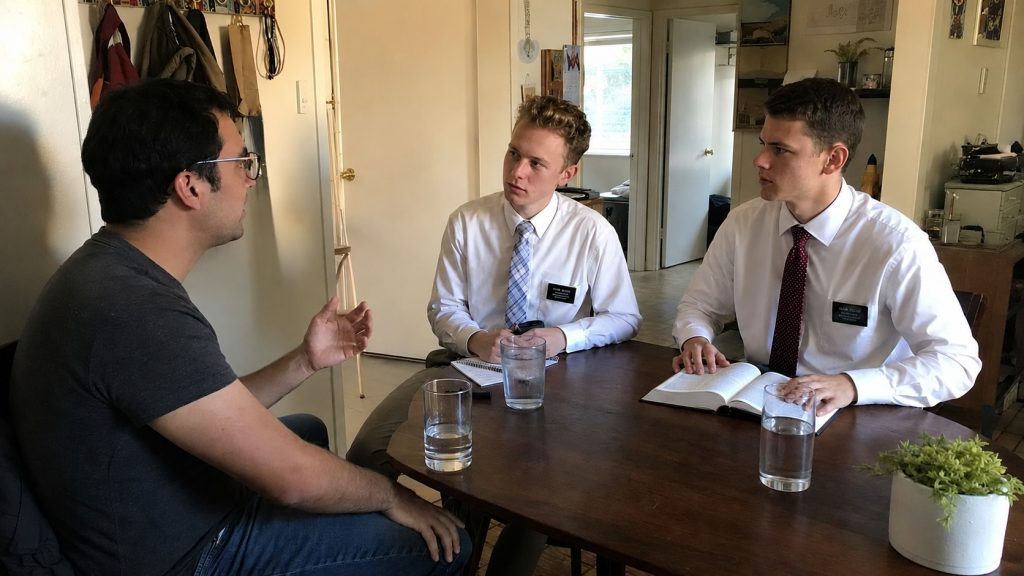
Knowing the four lessons still does not completely answer what many people really want to know:
What will actually happen if I agree to meet with Mormon missionaries?
What a Typical Visit Looks Like
You will typically meet with two missionaries, although circumstances can vary.
Meetings can take place in your home, in a public location, or virtually through a voice or video call.
The Church’s public visitor information says missionary visits usually last 15–45 minutes. The missionary guide itself encourages relatively short teaching visits rather than long lectures.
At an initial meeting, missionaries will normally spend some time getting to know you instead of immediately delivering a memorized presentation.
They may ask about your religious background, your beliefs, questions you have, or what led you to meet with them.
They will typically ask whether they can begin with a prayer. From there, they may introduce one or more gospel principles, read from the Bible or Book of Mormon, answer questions, and invite you to do something related to what was discussed.
That could mean reading a scripture passage, praying, attending a Sunday service, or scheduling another conversation.
Official visitor guide: What to Expect from a Lesson with the Missionaries
If you are curious about the rules the missionaries themselves follow—their schedules, dating restrictions, phones, family communication, companions, entertainment, and other standards—see our separate guide: Mormon Missionary Rules in 2026: What They Can and Can’t Do
Do You Need to Prepare Anything?
No special preparation is required.
You do not need to understand Latter-day Saint terminology or read the Book of Mormon before meeting missionaries.
You can ask direct questions.
You can say that you do not understand something.
You can explain that you disagree with a teaching or need more time to think about it.
A missionary visit is a conversation, even though the missionaries have specific religious messages and invitations they hope to share.
What Will Mormon Missionaries Ask You to Do?
Missionary teaching is intended to lead to action, not only to provide information.
Depending on the conversation and where someone is in the process, missionaries may invite a person to:
- pray about what they have learned;
- read from the Book of Mormon or Bible;
- pray about whether the Book of Mormon is true;
- attend a Sunday church service;
- meet with the missionaries again;
- change certain habits or begin living particular commandments;
- consider baptism.
The current missionary guide repeatedly emphasizes invitations because Latter-day Saint missionary teaching views acting on a teaching as part of developing faith.
But those invitations are not a fixed checklist that every person receives in exactly the same order.
And an invitation is still an invitation. You do not have to accept every commitment simply because you agreed to have a conversation with missionaries.
If missionaries invite you to a Sunday service, our first-time visitor guide explains what actually happens there: Mormon Church Service: What to Expect on Your First Sunday
Will Mormon Missionaries Ask You to Be Baptized?
Yes, they may.
Baptism is an explicit part of Latter-day Saint missionary teaching.
The current Preach My Gospel instructs missionaries to invite people to be baptized and confirmed when they feel the timing is appropriate. The invitation is not reserved for a final lesson after every other subject has been completed.
That means baptism may come up earlier in the process than some visitors expect.
At the same time, being asked does not mean someone has to say yes.
Missionaries are expected to explain what baptism means and help a person understand the commitments involved before baptism takes place.
In Latter-day Saint belief, baptism is followed by confirmation and receiving the gift of the Holy Ghost. It is viewed as the beginning of continuing discipleship rather than the final step of conversion.
So the role of baptism can be stated plainly:
Baptism is neither a hidden objective nor something a visitor is required to accept. It is an explicit part of Latter-day Saint missionary teaching, and the decision remains with the person being taught.
Official source: Preach My Gospel — The Invitation to Be Baptized and Confirmed
What Do Mormon Missionaries Teach Before Baptism?
Before baptism, missionaries try to make sure a person understands the basic beliefs and commitments involved in becoming a member of The Church of Jesus Christ of Latter-day Saints.
That includes teachings about:
- Jesus Christ;
- faith and repentance;
- the Restoration;
- baptism;
- the Holy Ghost;
- commandments;
- continued discipleship.
The precise teaching sequence can differ because missionaries are allowed to adapt lessons to the person.
But baptism is not intended to happen without preparation. The current Preach My Gospel contains a separate chapter devoted to helping people prepare for baptism and confirmation, in addition to the four teaching lessons.
This distinction is important:
The missionary lessons are not simply a course in Latter-day Saint beliefs. They are also meant to help a person decide whether to make and live the commitments associated with baptism.
Someone who is interested intellectually but not ready to make those commitments can say so.
Official source: Preach My Gospel, Chapter 12 — Help People Prepare for Baptism and Confirmation
Can You Say No or Stop Meeting With the Missionaries?
Yes.
Agreeing to one missionary visit does not obligate you to continue meeting.
You can decline a baptismal invitation, say that you are not ready to make a particular commitment, ask for more time, question something the missionaries teach, or decide not to schedule another visit.
You can also continue asking questions without immediately agreeing with everything you hear.
The missionaries have a clear religious purpose: they want to help people develop faith in Jesus Christ and, when a person chooses to do so, prepare for baptism and continued participation in the Church.
But the person being taught still decides whether to continue that process.
Frequently Asked Questions
How many Mormon missionary lessons are there?
There are four current Mormon missionary lessons in the second edition of Preach My Gospel:
- The Message of the Restoration of the Gospel of Jesus Christ
- Heavenly Father’s Plan of Salvation
- The Gospel of Jesus Christ
- Becoming Lifelong Disciples of Jesus Christ
Older sources may list five because the original 2004 edition organized the material differently.
What is the first Mormon missionary lesson?
The current first lesson is officially titled “The Message of the Restoration of the Gospel of Jesus Christ.”
It introduces God, Jesus Christ, and prophets before explaining Latter-day Saint beliefs about apostasy, Joseph Smith, the First Vision, the Restoration, and the Book of Mormon.
Do Mormon missionaries teach about Jesus Christ?
Yes.
Jesus Christ is central to all four lessons.
Missionaries teach about His ministry, Atonement, death, and Resurrection; faith in Christ and repentance; following Him through baptism; and continuing as His disciple after baptism.
Do Mormon missionaries use the Bible?
Yes.
Latter-day Saint missionaries teach from both the Bible and the Book of Mormon, along with other Latter-day Saint scriptures.
The Book of Mormon receives particular attention in missionary teaching because Latter-day Saints regard it as another witness of Jesus Christ and as evidence supporting their belief in Joseph Smith’s prophetic calling and the Restoration.
How long does a Mormon missionary lesson last?
There is no single required length.
The Church’s public visitor information says missionary visits usually last 15–45 minutes. Current missionary guidance also emphasizes keeping teaching simple and relatively brief.
More complex material may be divided across several meetings.
Do missionaries teach about temples before baptism?
Temples may come up during missionary conversations, especially when discussing families or lifelong discipleship.
However, the main pre-baptism teaching centers on the four current missionary lessons, baptism, and the commitments involved in living the gospel. Detailed temple ordinances are not the central subject of introductory missionary lessons.
The Bottom Line
Mormon missionaries currently work from four main lessons, but those lessons are not a rigid four-meeting course. Missionaries can adjust what they teach to the questions and needs of the person they are meeting.
They teach Latter-day Saint doctrine, but they also invite people to act on it—by praying, reading scripture, attending church, changing aspects of their lives, and considering baptism.
Those invitations are a real part of missionary teaching. So is the individual’s ability to ask questions, take more time, decline an invitation, or stop meeting altogether.
For the other side of missionary life—what the missionaries themselves can and cannot do — see our guide to current Mormon missionary rules.
And if you are thinking about accepting an invitation to attend church, see what to expect at a Mormon Sunday service.
Official Sources and Further Reading
Preach My Gospel — Chapter 3: Study and Teach the Gospel of Jesus Christ
The current overview of the four missionary lessons and guidance on adapting teaching to individual needs.
Read Chapter 3
Preach My Gospel — Lesson 1: The Message of the Restoration of the Gospel of Jesus Christ
Official material covering God, prophets, the Falling Away, Joseph Smith, the First Vision, the Book of Mormon, and suggested invitations.
Read Lesson 1
Preach My Gospel — Lesson 2: Heavenly Father’s Plan of Salvation
Official outline of Latter-day Saint teachings about premortal life, mortality, Christ’s Atonement, resurrection, judgment, and life after death.
Read Lesson 2
Preach My Gospel — Lesson 3: The Gospel of Jesus Christ
Official explanation of faith in Jesus Christ, repentance, baptism, the gift of the Holy Ghost, and enduring to the end.
Read Lesson 3
Preach My Gospel — Lesson 4: Becoming Lifelong Disciples of Jesus Christ
The current fourth lesson, organized around the baptismal covenant and continuing discipleship.
Read Lesson 4
The Invitation to Be Baptized and Confirmed
Official guidance explaining the role of baptism in missionary teaching.
Read the baptism section
What to Expect from a Lesson with the Missionaries
The Church’s public visitor guide covering where meetings can happen, their typical length, prayer, questions, and what a visit may look like.
Read the visitor guide
Preach My Gospel — Chapter 12: Help People Prepare for Baptism and Confirmation
Official guidance about preparation for baptism and continued support after baptism.
Read Chapter 12
Second Edition of Preach My Gospel Is Now Available — Church Newsroom
The Church’s June 2023 announcement explains the second edition and confirms that the new Lesson 4 combines the former Lessons 4 and 5.
Read the 2023 announcement